What Is Prosocial Behavior in Psychology? Definition, Types, Examples & Importance
Updated: 14/11/2026
10
People interact with others every day, and many of these interactions involve actions that support, help, or benefit someone else. A child may share a toy with a classmate, a teenager may comfort a friend who feels upset, or an adult may volunteer to help people in need. These positive social actions are examples of prosocial behavior.
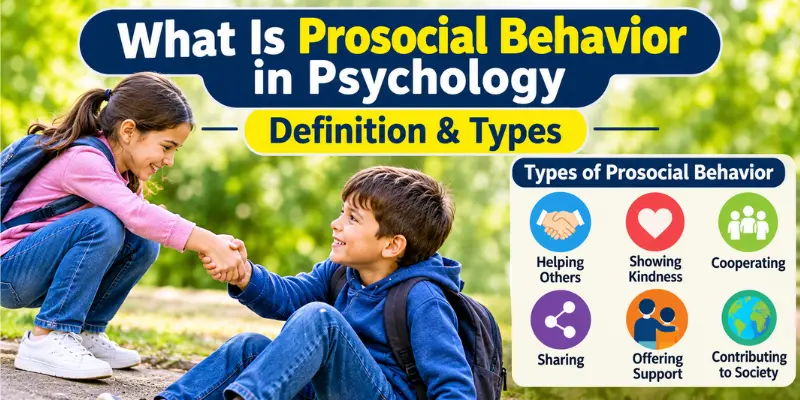
In psychology, prosocial behavior refers to voluntary actions intended to benefit another person or group. It includes helping, sharing, cooperating, comforting, donating, volunteering, and showing concern for others. Such actions can occur between family members, friends, classmates, coworkers, and even strangers.
Prosocial behavior is an important part of human social development because it helps people build relationships, understand different perspectives, manage social situations, and contribute positively to their communities. It also plays a significant role in child development, where children gradually learn to recognize other people’s needs and respond with kindness and consideration.
Understanding prosocial behavior can help parents, teachers, caregivers, and psychologists encourage positive social interactions in children and adults. It is also closely connected with topics such as social psychology, social development, emotional development, empathy, and social learning.
This article explains what prosocial behavior means in psychology, its characteristics, major types, real-life examples, psychological theories, influencing factors, benefits, and practical ways to encourage it.
What Is Prosocial Behavior in Psychology?
Prosocial behavior in psychology describes voluntary actions intended to help, support, or benefit another person or group. These actions are generally positive and contribute to the well-being of others, whether they involve offering assistance, sharing resources, cooperating, providing emotional support, or protecting someone from harm.
For example, when a student helps a classmate understand a difficult lesson without expecting anything in return, the action is considered prosocial. Similarly, a child who shares snacks with a friend or comforts another child who is crying demonstrates prosocial behavior.
The term does not describe only completely selfless actions. A person may help someone because of empathy, personal values, social expectations, a desire for recognition, or the possibility of receiving help in the future. The important point is that the action is intended to benefit another person.
Research in developmental psychology identifies helping, sharing, and comforting as important forms of early prosocial behavior. These actions can appear during childhood and develop through social experiences, emotional understanding, and interactions with parents, siblings, peers, and teachers. Further information is available in this research on prosocial behavior as helping, sharing, and comforting.
Simple Definition: Prosocial behavior is any voluntary action intended to benefit another person, such as helping, sharing, cooperating, comforting, or showing kindness.
Examples of Prosocial Behavior:
- Helping an elderly person carry groceries.
- Sharing toys, food, or learning materials with others.
- Comforting a friend who feels sad.
- Volunteering at a community organization.
- Helping a classmate complete a school assignment.
- Cooperating with teammates during a group activity.
- Donating clothes or food to people in need.
Prosocial behavior is not limited to children or family relationships. It can occur at school, in workplaces, public places, online communities, and wider society.
What Are the Main Characteristics of Prosocial Behavior?
Prosocial behavior has several characteristics that distinguish it from other forms of social interaction. Although the specific action may vary depending on the situation, these characteristics generally explain how people demonstrate concern for others.
1. Intention to Benefit Others
One of the central characteristics of prosocial behavior is the intention to provide some benefit to another person. The action may involve emotional support, practical assistance, sharing resources, or cooperation.
For example, a student who explains a difficult concept to a classmate is attempting to help that person understand the subject.
2. Voluntary Action
Prosocial behavior commonly involves a voluntary decision to help or support someone. A person may choose to offer assistance without being directly instructed or forced to do so.
For example, a child who notices a classmate struggling to pick up books and voluntarily helps collect them demonstrates a prosocial action.
3. Empathy and Concern
Empathy can encourage people to recognize and understand another person’s feelings. When someone notices that another person is experiencing sadness, fear, or difficulty, they may feel motivated to provide support.
For instance, a child who sees a friend crying and offers comfort is showing concern for that friend’s emotional condition.
4. Cooperation
Cooperation involves working with other people toward a shared objective. It requires communication, coordination, patience, and consideration of other people’s contributions.
Children demonstrate cooperation when they complete group projects, participate in team games, or work together to solve classroom problems.
5. Sharing and Generosity
Sharing involves providing another person with access to resources, possessions, time, or information. It may include sharing toys, food, educational materials, or personal knowledge.
For example, a student who lends a pencil to a classmate who has forgotten one demonstrates a simple form of prosocial behavior.
6. Respect for Others
Prosocial behavior also involves recognizing other people’s needs, feelings, and perspectives. Respectful actions include listening carefully, avoiding unnecessary conflict, and responding politely when someone needs assistance.
These characteristics help explain why prosocial behavior is important for healthy relationships and positive social development.
What Are the Types of Prosocial Behavior?
Prosocial behavior includes different actions through which people help, support, and benefit others. Some actions provide practical assistance, while others offer emotional comfort or encourage cooperation.
1. Helping Behavior
Helping behavior involves providing practical assistance to someone who needs support. It can occur in everyday situations and may require little effort or considerable time and resources.
Examples include:
- Helping a classmate understand a difficult lesson.
- Assisting an older person with household tasks.
- Helping a friend carry heavy bags.
- Giving directions to someone who is lost.
- Supporting a colleague with a challenging assignment.
Helping behavior is one of the most recognizable forms of prosocial action because it directly addresses another person’s needs.
2. Sharing Behavior
Sharing means allowing others to use or receive something that belongs to you or is available to you. It can involve physical possessions, food, money, educational resources, or information.
For example, children may share toys during playtime, while adults may share meals, books, or other resources with family members and friends.
Sharing is particularly important during childhood because it helps children learn cooperation, fairness, patience, and consideration for others.
3. Cooperating Behavior
Cooperation involves working with others to achieve a common goal. People cooperate by exchanging ideas, dividing responsibilities, following shared rules, and supporting one another.
Examples include students working together on school projects, children organizing a group game, employees completing a team assignment, and family members sharing household responsibilities.
Cooperation encourages teamwork and helps people develop positive social relationships.
4. Comforting Behavior
Comforting behavior involves providing emotional support to someone experiencing sadness, fear, disappointment, or another difficult emotion.
It may include listening, offering reassurance, expressing sympathy, or simply staying with someone who needs company.
For example, a child may comfort a classmate who has fallen during playground activities. An adult may listen to a friend who is experiencing personal difficulties.
Comforting behavior demonstrates emotional awareness and concern for other people’s well-being.
5. Donating and Giving
Donating involves voluntarily providing money, food, clothing, supplies, or other resources to individuals or organizations that need assistance.
Examples include donating clothes to a shelter, contributing food to a community food bank, giving school supplies to children from low-income families, and supporting organizations that provide disaster relief.
These actions can benefit individuals and communities by helping address practical needs.
6. Volunteering
Volunteering means offering time, skills, or services to support other people or a community without making financial compensation the primary purpose.
For example, a person may volunteer at a community center, help organize a neighborhood cleanup, tutor children, or participate in a charity event.
Volunteering can also help individuals develop communication, teamwork, leadership, and social responsibility.
7. Defending and Protecting Others
Defending behavior involves taking appropriate action to support someone who is being treated unfairly, bullied, threatened, or excluded.
Examples include supporting a classmate who is being bullied, reporting unsafe behavior to a responsible adult, including someone who is being left out of a group activity, and speaking up when another person is treated unfairly.
Defending others can promote safety, inclusion, and respect within social groups.
Research on prosocial behavior in early childhood commonly distinguishes helping, sharing, and comforting as important categories because each responds to a different type of need. The research literature on prosocial behavior provides further insight into these actions and their relationship with psychological well-being.
What Are Some Examples of Prosocial Behavior in Everyday Life?
Prosocial behavior occurs in ordinary situations rather than only in organized charitable activities. People demonstrate it through small decisions and actions that improve someone else’s experience.
Examples at Home
Family relationships provide many opportunities for prosocial behavior. Children and adults can support one another through daily activities.
Examples include helping parents with household chores, sharing food with siblings, comforting a family member who feels upset, helping younger children with homework, and taking care of a family member who is unwell.
These actions help family members develop cooperation, consideration, and responsibility.
Examples at School
Schools provide an important environment for children to learn positive social behavior through interactions with classmates and teachers.
Examples include helping a classmate understand a lesson, sharing books and other supplies, including a new student in group activities, helping someone who falls on the playground, and participating fairly in team assignments.
Teachers can encourage these behaviors through classroom activities, group learning, and positive examples.
Examples in the Community
People can also demonstrate prosocial behavior by contributing to their neighborhoods and communities.
Examples include helping an elderly neighbor with shopping, participating in community cleanup activities, donating food to families in need, volunteering at local organizations, and supporting people affected by emergencies.
Such actions can strengthen community relationships and encourage collective responsibility.
Examples in the Workplace
Prosocial behavior is also important in professional environments because employees regularly depend on cooperation and communication.
Examples include helping a new employee understand workplace procedures, sharing useful information with colleagues, supporting a coworker during a busy period, giving constructive feedback respectfully, and cooperating to complete a shared project.
These actions can contribute to a more supportive and productive workplace.
How Does Prosocial Behavior Develop in Children?
Prosocial behavior is an important part of child development. Children gradually learn how to recognize other people’s needs, understand emotions, share resources, cooperate, and provide assistance.
These abilities do not develop in exactly the same way or at the same age for every child. They are influenced by cognitive development, emotional maturity, family relationships, social experiences, and opportunities to interact with others.
1. Early Childhood
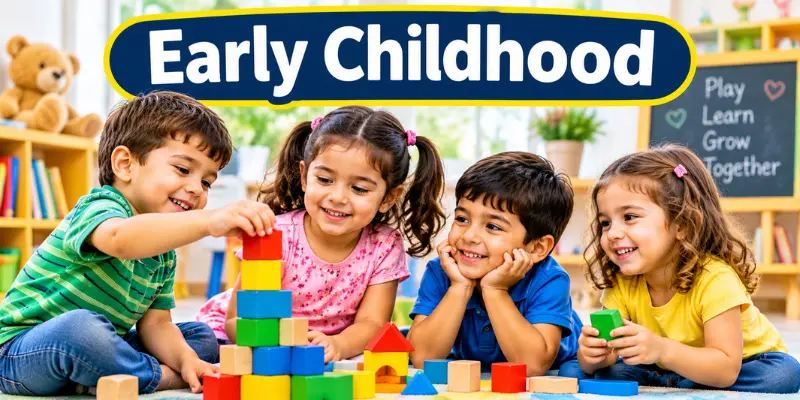
During early childhood, children begin to demonstrate simple forms of helping, sharing, and comforting. They may pick up an object for someone, offer a toy, or respond when another child appears upset.
At this stage, children are still developing emotional understanding and self-regulation. They may understand that someone needs help but find it difficult to share a favorite possession or control their own reactions.
Parents and caregivers can support development by modeling kindness, using simple explanations, and creating opportunities for children to practice sharing and helping.
2. Preschool Years
As children enter preschool, they have more opportunities to interact with peers outside their families. Group play, classroom routines, and shared activities help them understand cooperation and social expectations.
They may begin to share toys during play, take turns in group activities, help classmates complete simple tasks, recognize when another child is upset, and offer comfort to someone who is hurt.
Children at this stage benefit from adult guidance because they are still learning to manage disagreements and understand different perspectives.
3. School-Age Children
During school years, children generally develop more advanced social and emotional skills. They become increasingly able to understand other people’s viewpoints, recognize fairness, and consider the consequences of their actions.
They may demonstrate prosocial behavior by helping classmates, participating in group projects, supporting friends, and taking responsibility for shared tasks.
Peer relationships become increasingly important, and positive classroom experiences can provide opportunities to practice empathy and cooperation.
4. Adolescence
During adolescence, social relationships become more complex. Teenagers develop a stronger understanding of social responsibilities, personal values, friendship, and group expectations.
They may demonstrate prosocial behavior through volunteering for community activities, supporting friends experiencing emotional difficulties, helping younger students, participating in charity programs, and standing against bullying.
Research on prosocial development in children explores how these behaviors develop through social experiences and relationships.
Parents interested in these developmental processes may also explore social and emotional learning (SEL), which focuses on skills that help children understand emotions, develop relationships, and make responsible decisions.
What Is the Difference Between Prosocial Behavior and Altruism?
Prosocial behavior and altruism are closely related concepts in psychology, but they do not have exactly the same meaning.
Prosocial behavior refers to voluntary actions intended to benefit another person or group. These actions can be motivated by different reasons, including empathy, personal values, social expectations, rewards, or a desire for cooperation.
Altruism, on the other hand, refers to helping behavior motivated primarily by concern for another person’s well-being rather than personal gain.
For example, a person who volunteers at a charity because they genuinely want to help others may demonstrate altruistic motivation. Another person may volunteer to gain experience, meet people, or improve their professional profile. Both actions can benefit others and therefore qualify as prosocial behavior, although their motivations differ.
| Prosocial Behavior | Altruism |
|---|---|
| Broad category of actions intended to benefit others. | A more specific form of helping behavior. |
| May involve personal or social benefits. | Primarily motivated by concern for others. |
| Can be motivated by rewards or recognition. | Does not depend on expecting personal rewards. |
| Includes helping, sharing, cooperating, and donating. | Emphasizes selfless concern and assistance. |
| Motivation can vary from situation to situation. | Motivation is generally other-oriented. |
The American Psychological Association’s social psychology resources provide background on helping, altruism, and related social behaviors.
Therefore, altruism is generally considered a particular form of prosocial behavior, rather than a completely separate category.
What Is the Difference Between Prosocial Behavior and Antisocial Behavior?
Prosocial and antisocial behavior represent contrasting patterns of social interaction.
Prosocial behavior involves actions intended to benefit, support, or cooperate with others. Antisocial behavior generally involves actions that harm others, violate social expectations, or disregard other people’s rights and well-being.
For example, helping a classmate complete an assignment is prosocial behavior, whereas deliberately bullying or intimidating that classmate is an example of harmful antisocial conduct.
| Prosocial Behavior | Antisocial Behavior |
|---|---|
| Supports other people’s well-being. | Can harm or disregard other people’s well-being. |
| Encourages cooperation. | May involve conflict or aggression. |
| Includes sharing and helping. | May include bullying and deliberate harm. |
| Promotes positive relationships. | Can damage relationships. |
| Often demonstrates empathy and concern. | May involve a lack of concern for others in a particular situation. |
| Supports a positive social environment. | Can disrupt social environments. |
It is important to understand that a person’s behavior can vary across situations. A child who behaves cooperatively in one setting may struggle with sharing or managing frustration in another. A single negative action does not automatically establish a lasting behavioral pattern.
For a better understanding of how social environments influence people’s actions, read What Is Social Influence in Psychology?.
What Psychological Theories Explain Prosocial Behavior?
Psychologists have developed several theories to explain why people help others and how prosocial behavior develops. These perspectives consider learning, emotional responses, social relationships, moral development, and human motivation.
1. Social Learning Theory
Social Learning Theory, associated with psychologist Albert Bandura, explains that people can learn behaviors by observing and imitating others.
Children often watch how parents, teachers, siblings, and peers behave in different situations. When they observe someone helping another person, sharing resources, or showing kindness, they may imitate similar actions.
For example, a child who regularly sees parents helping neighbors may begin offering assistance to classmates and friends.
Positive feedback can also strengthen observed behaviors. When adults recognize and encourage helpful actions, children may become more likely to repeat them.
Social learning therefore helps explain how everyday family and school experiences contribute to prosocial development.
2. Empathy-Altruism Perspective
The empathy-altruism perspective suggests that empathy can motivate people to help others because they are concerned about another person’s well-being.
For example, when a person sees a child who is frightened or injured, they may experience concern and feel motivated to provide assistance.
This perspective emphasizes the importance of understanding another person’s emotional condition. It also helps explain why some people offer support even when they do not expect a personal reward.
However, not every prosocial action is motivated by empathy. People may also help because of social expectations, moral values, personal benefits, or other reasons.
3. Social Exchange Theory
Social Exchange Theory explains social interactions in terms of perceived benefits and costs.
According to this perspective, people may be more likely to help when they believe the benefits of helping outweigh the costs. Benefits can include appreciation, friendship, emotional satisfaction, social approval, or the possibility of receiving assistance later.
For example, an employee may help a colleague complete a project because they value teamwork and expect a cooperative working relationship.
This theory helps explain why some prosocial actions involve both concern for others and personal benefits.
4. Norm of Reciprocity
The norm of reciprocity is the social expectation that people should return help or kindness when others provide support.
For example, if a neighbor helps someone during a difficult situation, that person may feel motivated to help the neighbor in the future.
Reciprocity can strengthen relationships because people learn that cooperation and mutual assistance are valuable parts of social life.
5. Moral Development Perspective
Moral development perspectives examine how people learn to distinguish between right and wrong and how moral reasoning influences their behavior.
As children mature, they gradually develop a better understanding of fairness, responsibility, rules, and the effects of their actions on others.
For example, a young child may share because a parent asks them to do so. As the child develops, they may begin sharing because they understand that other children also need opportunities and resources.
Moral understanding can therefore contribute to more thoughtful and consistent prosocial behavior.
No single theory explains every form of prosocial action. Different behaviors may involve different motivations, developmental processes, and social conditions.
For additional academic background, the PubMed research literature on empathy and prosocial behavior in young children provides further reading.
What Factors Influence Prosocial Behavior?
Prosocial behavior develops through a combination of personal characteristics and environmental influences. Some people may naturally show greater concern for others, while experiences at home, school, and in the community can also shape how individuals respond to social situations.
1. Family Environment
Family relationships provide some of the earliest opportunities for children to observe and practice prosocial behavior.
Parents and caregivers influence children’s behavior through their own actions, communication, expectations, and responses to others.
For example, children who regularly observe family members sharing, helping, and treating others respectfully may be more likely to demonstrate similar behaviors.
2. Parenting Style
Supportive parenting can encourage children to develop empathy, responsibility, and social awareness.
Parents can explain why certain actions help others, encourage children to consider different perspectives, and provide opportunities to practice kindness.
For instance, instead of simply ordering a child to share a toy, a parent can explain that another child would also like an opportunity to play.
3. Empathy and Emotional Understanding
Empathy helps individuals recognize and understand the emotions of others. It can motivate them to offer comfort, assistance, or reassurance.
A child who understands that a classmate feels lonely may invite that classmate to join a game.
Emotional awareness therefore plays an important role in many forms of prosocial behavior.
4. Peer Influence
Friends and classmates can influence how children behave socially. Positive peer groups may encourage cooperation, inclusion, sharing, and mutual support.
For example, when several students help a classmate who is struggling with schoolwork, other students may be encouraged to participate.
However, peer influence can also discourage prosocial behavior when a group rewards bullying, exclusion, or disrespect.
This connects with conformity in social psychology, which examines how individuals adjust their behavior in response to group expectations.
5. School Environment
Schools provide structured opportunities for children to learn and practice social skills. Classroom rules, group assignments, cooperative games, and teacher behavior can all influence prosocial development.
A school that encourages respect, inclusion, and teamwork can help children understand the importance of supporting one another.
6. Culture and Social Expectations
Cultural values and community expectations can influence how people express kindness, generosity, cooperation, and responsibility.
Some communities may emphasize collective responsibilities, while others may place greater emphasis on individual initiative. Both can encourage prosocial actions in different ways.
7. Personal Values and Moral Understanding
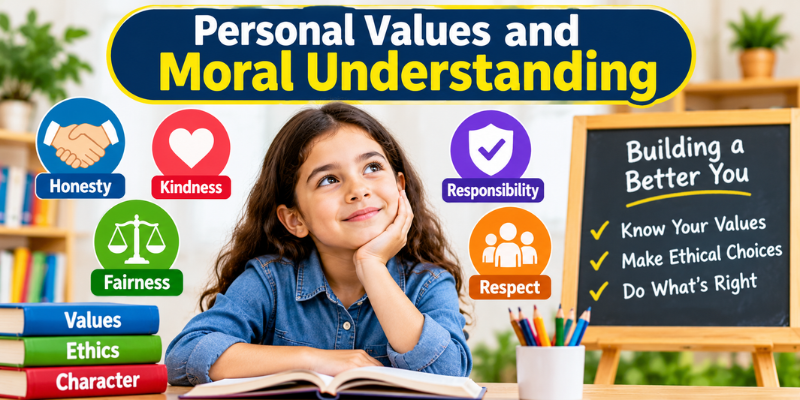
Personal values can influence whether people choose to help others, even when there is no direct reward.
Individuals who value fairness, kindness, responsibility, and respect may be more inclined to support others when opportunities arise.
8. Opportunities to Help
People need opportunities to practice prosocial behavior. Children who participate in group activities, community projects, and shared responsibilities can develop practical experience in helping and cooperating.
What Is the Importance of Prosocial Behavior in Psychology?
Prosocial behavior is important because it supports healthy relationships, emotional development, cooperation, and social well-being. Its effects can be seen in families, schools, workplaces, and communities.
1. Builds Positive Relationships
Helping, sharing, and showing concern can strengthen relationships between individuals. When people support one another, they often develop greater trust, mutual respect, and a sense of connection.
For children, these experiences can help them build friendships and maintain positive relationships with classmates.
2. Encourages Empathy
Prosocial behavior gives individuals opportunities to understand other people’s emotions and perspectives.
For example, comforting a friend who feels disappointed requires recognizing that person’s emotional experience and responding with concern.
Repeated experiences can help children become more aware of the feelings and needs of others.
3. Supports Emotional Development
Positive social interactions can provide opportunities to practice emotional awareness and regulation.
Children learn to manage frustration, wait for their turn, respond to disagreements, and consider how their behavior affects others.
These experiences can contribute to healthier emotional and social development.
4. Improves Cooperation and Teamwork
Many personal, educational, and professional activities require people to work together. Prosocial behavior encourages individuals to share responsibilities, exchange ideas, and support common objectives.
For example, students who cooperate during group assignments can learn how to contribute fairly and respect different opinions.
5. Promotes a Positive School Environment
Prosocial behavior can help create classrooms where students feel included, respected, and supported.
Helping classmates, avoiding exclusion, sharing materials, and standing against bullying can contribute to a safer and more welcoming learning environment.
6. Encourages Social Responsibility
Prosocial actions help individuals recognize that their decisions can affect other people and the wider community.
Volunteering, donating, helping neighbors, and participating in community activities can develop a sense of responsibility toward others.
7. Strengthens Communities
Communities often depend on cooperation and mutual assistance. When people support neighbors, volunteer, and contribute resources, they can help address shared problems.
These actions can strengthen social connections and encourage collective efforts during challenging situations.
8. Supports Positive Social Development
Prosocial behavior is associated with social competence and positive relationships. In children, it is studied alongside empathy, moral reasoning, self-regulation, and peer relationships.
The SAGE Encyclopedia’s overview of prosocial behavior offers further academic context about this subject.
How Can Parents Encourage Prosocial Behavior in Children?
Parents play an important role in helping children learn how to interact positively with others. Children often develop social behaviors by observing adults, practicing everyday activities, and receiving guidance when they encounter difficult situations.
1. Model Positive Behavior
Children learn by observing how adults treat other people. Parents can demonstrate kindness by helping neighbors, speaking respectfully, sharing resources, and showing concern for people who need assistance.
For example, when parents help an elderly neighbor carry groceries, children can observe how a small action supports another person.
2. Encourage Sharing and Cooperation
Parents can create simple opportunities for children to share toys, take turns, and complete activities together.
Board games, building activities, and shared household tasks can help children understand cooperation.
Parents should remember that children may need time and guidance to learn sharing, especially when they feel strongly attached to particular possessions.
3. Teach Empathy
Parents can help children recognize and discuss emotions.
For example, if a child sees a friend crying, a parent might ask, “How do you think your friend feels?” or “What could you do to help?”
These questions encourage children to consider another person’s perspective.
4. Recognize Helpful Actions
Positive feedback can encourage children to repeat helpful behavior.
Parents can recognize specific actions, such as sharing a toy, comforting a sibling, or helping with household responsibilities.
For example, saying, “That was thoughtful of you to help your brother,” explains exactly which action was positive.
5. Provide Opportunities for Volunteering
Age-appropriate community activities can help children understand the importance of supporting others.
Parents may involve children in collecting food donations, organizing clothing for charity, or participating in neighborhood cleanup activities.
These experiences help children connect positive social values with real-life actions.
6. Teach Respectful Communication
Children need to learn how to express their needs while respecting other people’s feelings.
Parents can encourage listening, polite language, turn-taking, and constructive ways of resolving disagreements.
These skills can help children maintain healthier relationships with family members and peers.
7. Encourage Responsibility at Home
Simple household responsibilities can teach children that their actions contribute to the well-being of others.
Examples include helping set the table, organizing shared toys, feeding a family pet under supervision, or assisting younger siblings with simple tasks.
The aim is to develop consideration and responsibility rather than expecting children to perform tasks beyond their abilities.
How Can Teachers Promote Prosocial Behavior in the Classroom?
Teachers can influence children’s social development by creating an environment that encourages cooperation, inclusion, respect, and mutual support.
1. Use Group Learning Activities
Group projects encourage students to share ideas, divide responsibilities, and work toward common objectives.
Teachers can assign different roles so that every student has an opportunity to contribute.
2. Encourage Peer Support
Teachers can create opportunities for students to help one another with learning activities.
For example, a student who understands a particular topic may explain it to a classmate who needs additional support.
Peer assistance can promote cooperation while reinforcing positive classroom relationships.
3. Establish Clear Classroom Expectations
Classroom rules should encourage respectful communication, fairness, inclusion, and responsible behavior.
Teachers can explain why students should listen to one another, avoid bullying, share resources, and respect differences.
4. Recognize Kindness and Cooperation
Teachers can recognize students who demonstrate helpful behavior, include classmates, or contribute positively to group activities.
Recognition should focus on the action and its positive effect rather than labeling some children as better than others.
5. Teach Conflict Resolution
Disagreements are a normal part of children’s social development. Teachers can help students understand different viewpoints and resolve conflicts through respectful communication.
For example, students involved in a disagreement can be encouraged to explain their feelings, listen to each other, and find a fair solution.
6. Promote Inclusion
Teachers should encourage activities in which students have opportunities to participate regardless of their abilities, backgrounds, or friendship groups.
Including students who are often left out can help develop empathy and a stronger sense of classroom belonging.
These strategies can complement wider social and emotional learning activities, which help students develop emotional awareness, relationship skills, and responsible decision-making.
What Is the Role of Prosocial Behavior in Social Psychology?
Social psychology examines how people’s thoughts, emotions, and behaviors are influenced by other individuals and social environments. Prosocial behavior is an important topic within this field because it explains how people respond to the needs of others and participate in social relationships.
People do not make every social decision independently of their surroundings. Family expectations, peer behavior, cultural values, group membership, and social situations can all influence whether someone chooses to help.
For example, a student may be more likely to assist a classmate when the classroom encourages cooperation. Similarly, an employee may volunteer to help a colleague when teamwork is valued in the workplace.
Social psychology also examines situations in which people fail to offer assistance. One example is the bystander effect, in which the presence of other people can reduce an individual’s likelihood of intervening in an emergency. Diffusion of responsibility is one explanation: each person may assume that someone else will take action.
The American Psychological Association discusses helping behavior, altruism, empathy, and the bystander effect in its social psychology educational resources.
Prosocial behavior therefore helps psychologists understand both positive social interactions and the conditions that encourage or discourage helping.
For further reading, explore the nature and scope of social psychology, which explains how social environments influence human thoughts and behavior.
What Are the Challenges That Can Reduce Prosocial Behavior?
Although many people demonstrate prosocial behavior, certain personal and social conditions can make helping less likely.
Understanding these challenges can help parents, teachers, and communities create environments that encourage positive interactions.
1. Lack of Empathy
Some individuals may struggle to recognize or understand another person’s emotions. Without sufficient emotional awareness, they may not realize that someone needs comfort or assistance.
2. Self-Centered Behavior
People may sometimes prioritize their own needs, possessions, or interests over the needs of others. Young children, in particular, are still developing the ability to balance their preferences with other people’s expectations.
3. Fear of Rejection
A person may hesitate to help because they are afraid of embarrassment, criticism, or negative reactions.
For example, a student may want to support a classmate who is being bullied but may remain silent because they fear becoming a target.
4. Peer Pressure
Negative peer influence can discourage kindness, cooperation, and inclusion. A child may avoid helping someone because their friends consider that person unpopular.
5. Lack of Positive Role Models
Children who rarely observe supportive and respectful interactions may have fewer opportunities to learn how prosocial behavior works in everyday situations.
6. Social Situations and Diffusion of Responsibility
In emergencies, people may assume that someone else will provide assistance. When responsibility is unclear, individuals may hesitate to act.
Understanding these barriers can help people develop greater awareness and take appropriate action when others need support.
Frequently Asked Questions About Prosocial Behavior
1. What Is Prosocial Behavior in Simple Words?
Prosocial behavior means doing something positive to help or benefit another person. Examples include sharing, helping, comforting, cooperating, donating, and showing kindness.
2. What Is an Example of Prosocial Behavior in Psychology?
Helping a classmate understand a difficult lesson is an example of prosocial behavior. Other examples include sharing food, comforting a friend, volunteering, and assisting someone who needs support.
3. What Are the Four Main Types of Prosocial Behavior?
Common types include helping, sharing, cooperating, and comforting. Other forms include donating, volunteering, and defending people who need support.
4. Why Is Prosocial Behavior Important in Child Development?
Prosocial behavior helps children develop empathy, cooperation, social responsibility, and positive relationships. It also gives them opportunities to understand other people’s needs and practice appropriate social interactions.
5. Is Prosocial Behavior the Same as Altruism?
No. Prosocial behavior is a broad category of actions intended to benefit others, while altruism refers to helping that is primarily motivated by concern for another person’s well-being rather than personal gain.
6. What Is the Difference Between Prosocial and Antisocial Behavior?
Prosocial behavior involves actions intended to benefit or support others, whereas antisocial behavior generally involves actions that harm others, violate social expectations, or disregard their rights and well-being.
7. Can Prosocial Behavior Be Learned?
Yes. People can develop prosocial behavior through observation, practice, positive relationships, parental guidance, classroom experiences, and community involvement.
8. At What Age Does Prosocial Behavior Develop?
Simple forms of prosocial behavior, such as helping and sharing, can appear during early childhood. These abilities continue developing through social experiences, emotional understanding, and interactions with family members, peers, and teachers.
9. What Is the Role of Empathy in Prosocial Behavior?
Empathy helps people understand another person’s emotional experience. It can encourage them to provide comfort, support, and assistance when someone is experiencing difficulty.
10. What Is the Opposite of Prosocial Behavior?
Antisocial behavior is generally considered the opposite of prosocial behavior because it involves actions that may harm others or disrupt positive social relationships.
Conclusion
Prosocial behavior is an important concept in psychology that describes voluntary actions intended to benefit other people. It includes helping, sharing, cooperation, comforting, donating, volunteering, and defending those who need support.
These actions contribute to positive relationships, social responsibility, empathy, and cooperation. They are especially important during childhood because children gradually learn how to recognize emotions, understand different perspectives, and respond appropriately to other people’s needs.
Parents, teachers, caregivers, and communities can encourage prosocial behavior by modeling kindness, promoting cooperation, teaching empathy, recognizing helpful actions, and providing opportunities for children to support others.
Ultimately, prosocial behavior is not limited to major acts of generosity. Small everyday actions, such as listening to a friend, sharing resources, helping a classmate, or supporting a neighbor, can make a meaningful difference in people’s lives and contribute to a more supportive society.
References and Further Reading
- American Psychological Association — Social Psychology Resources
- NCBI — Prosocial Behavior as Helping, Sharing, and Comforting
- Cambridge University Press — What Is Prosocial Development?
- PubMed — Research on Prosocial Behavior and Empathy in Young Children
- NCBI — Prosocial Behavior, Psychological Well-Being, and Related Research
- SAGE Encyclopedia — Prosocial Behavior
Please Write Your Comments