List of Good Habits for Students: Daily Practices for Academic and Personal Success
Updated: 15/06/2026
6
Good habits shape a student’s future. Academic achievement, personal growth, confidence, discipline, and strong character often begin with simple daily actions. Students who develop productive routines early gain advantages that extend beyond school and into adulthood.
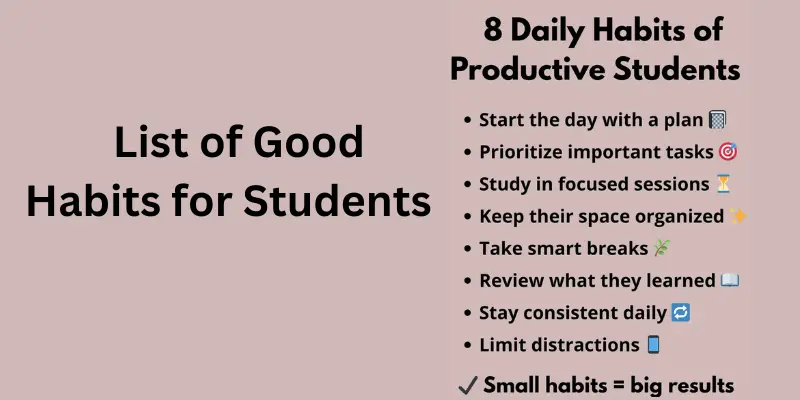
A well-planned list of good habits for students helps improve concentration, academic performance, physical health, emotional well-being, and social relationships. These habits create consistency and encourage lifelong learning.
This comprehensive guide explores the most effective habits students can adopt to succeed in school and life.
Why Good Habits Matter for Students
Students face many responsibilities. School assignments, exams, extracurricular activities, social interactions, and personal development require balance and discipline.
Good habits help students:
- Improve academic performance
- Build self-discipline
- Reduce stress
- Increase productivity
- Develop confidence
- Maintain physical and mental health
- Strengthen problem-solving abilities
- Prepare for future careers
Success rarely happens by accident. It develops through daily actions repeated consistently.
Comparison Chart of 30 Good and Bad Habits for Students
| # | Good Habit | Bad Habit |
|---|---|---|
| 1 | Waking up early | Sleeping late regularly |
| 2 | Following a study schedule | Studying only before exams |
| 3 | Completing homework on time | Missing assignment deadlines |
| 4 | Reading daily | Avoiding books and learning materials |
| 5 | Taking organized notes | Ignoring note-taking in class |
| 6 | Managing time effectively | Procrastinating important tasks |
| 7 | Setting daily goals | Living without a plan |
| 8 | Attending classes regularly | Skipping classes frequently |
| 9 | Listening attentively in class | Being distracted during lessons |
| 10 | Asking questions when confused | Staying silent despite confusion |
| 11 | Keeping a clean study area | Studying in a cluttered environment |
| 12 | Reviewing lessons daily | Forgetting lessons until exams |
| 13 | Maintaining a healthy diet | Eating excessive junk food |
| 14 | Drinking enough water | Consuming sugary drinks excessively |
| 15 | Exercising regularly | Living a sedentary lifestyle |
| 16 | Getting sufficient sleep | Staying awake unnecessarily |
| 17 | Using technology for learning | Using devices mainly for distractions |
| 18 | Practicing self-discipline | Giving in to every distraction |
| 19 | Thinking positively | Maintaining a negative mindset |
| 20 | Respecting teachers and peers | Being disrespectful to others |
| 21 | Participating in extracurricular activities | Avoiding productive involvement |
| 22 | Practicing good hygiene | Neglecting personal cleanliness |
| 23 | Saving money regularly | Spending impulsively |
| 24 | Using social media responsibly | Excessive social media scrolling |
| 25 | Protecting online privacy | Sharing personal information online |
| 26 | Developing leadership skills | Avoiding responsibility |
| 27 | Practicing mindfulness and stress management | Allowing stress to build unchecked |
| 28 | Learning new skills continuously | Resisting learning opportunities |
| 29 | Accepting feedback for improvement | Ignoring constructive criticism |
| 30 | Maintaining honesty and integrity | Cheating or being dishonest |
Key Takeaway
Good habits help students improve academic performance, discipline, health, confidence, and future career success. Bad habits often lead to poor grades, stress, low productivity, and missed opportunities. Replacing even one bad habit with a positive habit can create long-term benefits for students’ personal and educational development.
Wake Up Early Every Day
Benefits of Early Rising for Students
One of the most important habits students can develop is waking up early. Early mornings provide quiet time for planning, studying, and preparing for the day.
Students who wake up early often experience:
- Better concentration
- Improved time management
- Reduced stress
- Greater productivity
How to Build the Habit
- Maintain a fixed sleep schedule
- Avoid screens before bedtime
- Set realistic wake-up times
- Prepare school materials the night before
Follow a Consistent Study Schedule
Why Study Consistency Matters
A structured study routine helps students retain information more effectively. Studying regularly reduces last-minute cramming and improves long-term understanding.
Effective Study Routine Tips
- Study at the same time daily
- Break sessions into manageable blocks
- Review class notes regularly
- Focus on understanding concepts
A consistent study schedule remains one of the most valuable items on any list of good habits for students.
Set Daily Goals
Importance of Goal Setting
Students who set daily goals stay focused and motivated. Goals create direction and help track progress.
Examples include:
- Completing assignments
- Reading a chapter
- Practicing mathematics
- Learning new vocabulary
SMART Goal Strategy
Goals should be:
- Specific
- Measurable
- Achievable
- Relevant
- Time-bound
Manage Time Effectively
Time Management Skills for Students
Poor time management often leads to stress and lower academic performance.
Students should:
- Use planners or calendars
- Prioritize important tasks
- Avoid procrastination
- Allocate time for study and relaxation
Benefits
- Better organization
- Increased productivity
- Improved academic results
Read Every Day
Daily Reading Habit
Reading expands knowledge, vocabulary, and critical thinking skills.
Students can read:
- Books
- Newspapers
- Educational articles
- Academic resources
Advantages
- Improved language skills
- Enhanced creativity
- Better comprehension
- Increased general knowledge
Reading remains a foundational element in any successful list of good habits for students.
Take Notes During Classes
Why Note-Taking Matters
Active note-taking improves understanding and memory retention.
Effective note-taking helps students:
- Focus during lessons
- Organize information
- Review concepts efficiently
Best Practices
- Use clear headings
- Highlight key concepts
- Review notes after class
Stay Organized
Importance of Organization
Organized students save time and reduce stress.
Ways to stay organized:
- Maintain clean study spaces
- Use folders for subjects
- Track assignments
- Keep school materials accessible
Outcomes
- Increased efficiency
- Better academic performance
- Reduced anxiety
Complete Homework on Time
Building Responsibility
Homework reinforces classroom learning. Completing assignments promptly develops accountability and discipline.
Practical Tips
- Start homework early
- Break large tasks into smaller sections
- Eliminate distractions
Students who complete homework consistently often achieve better grades.
Practice Active Listening
Benefits in the Classroom
Active listening improves comprehension and participation.
Students should:
- Maintain eye contact
- Avoid distractions
- Ask questions when needed
- Focus on teacher instructions
Results
- Better understanding
- Improved academic performance
- Enhanced communication skills
Limit Screen Time
Managing Digital Distractions
Technology offers educational benefits, but excessive screen time can reduce productivity.
Students should:
- Set screen limits
- Avoid unnecessary social media use
- Use educational platforms responsibly
Benefits
- Improved focus
- Better sleep quality
- Increased study efficiency
Maintain a Healthy Diet
Nutrition and Academic Success
Proper nutrition directly affects concentration, energy, and memory.
Students should consume:
- Fruits
- Vegetables
- Whole grains
- Protein-rich foods
Foods to Limit
- Sugary snacks
- Soft drinks
- Excessive fast food
Healthy eating supports both physical and academic performance.
Exercise Regularly
Importance of Physical Activity
Exercise improves brain function, mood, and energy levels.
Activities include:
- Walking
- Running
- Sports
- Cycling
- Stretching
Benefits
- Better concentration
- Reduced stress
- Stronger health
Get Enough Sleep
Sleep and Learning
Sleep plays a critical role in memory and learning.
Most students require:
- 8 to 10 hours of sleep
Good Sleep Habits
- Consistent bedtime
- Comfortable sleep environment
- Limited screen exposure before sleep
Adequate sleep is a key recommendation in every list of good habits for students.
Ask Questions Without Fear
Building Curiosity
Curious students learn more effectively.
Questions help:
- Clarify confusion
- Deepen understanding
- Encourage engagement
Developing Confidence
Students should remember that asking questions demonstrates interest in learning.
Develop Self-Discipline
Why Self-Discipline Matters
Self-discipline enables students to stay focused despite distractions.
Methods include:
- Following schedules
- Avoiding procrastination
- Maintaining commitments
Long-Term Impact
Self-discipline contributes to academic and professional success.
Practice Positive Thinking
Mindset and Achievement
Positive thinking helps students overcome challenges and maintain motivation.
Students can:
- Focus on solutions
- Celebrate progress
- Learn from mistakes
Benefits
- Improved resilience
- Better confidence
- Reduced stress
Respect Teachers and Classmates
Building Strong Relationships
Respect creates a positive learning environment.
Students should:
- Listen attentively
- Use polite language
- Appreciate diverse opinions
Outcomes
- Better classroom experiences
- Improved communication skills
Review Lessons Daily
Reinforcing Learning
Daily review strengthens memory and understanding.
Students should:
- Revisit notes
- Practice exercises
- Summarize key concepts
Academic Benefits
- Better retention
- Improved exam preparation
Learn Problem-Solving Skills
Critical Thinking Development
Problem-solving encourages independent thinking.
Students can improve by:
- Analyzing situations
- Exploring alternatives
- Evaluating solutions
Future Advantages
Strong problem-solving skills support academic and career growth.
Develop Good Communication Skills
Importance for Students
Communication influences academic success and social development.
Ways to improve:
- Participate in discussions
- Practice public speaking
- Improve writing skills
Benefits
- Greater confidence
- Better collaboration
Practice Gratitude
Positive Emotional Development
Gratitude encourages appreciation and optimism.
Students can:
- Keep gratitude journals
- Recognize achievements
- Appreciate support from others
Results
- Better emotional well-being
- Increased happiness
Participate in Extracurricular Activities
Balanced Development
Activities beyond academics help build leadership, teamwork, and creativity.
Examples:
- Sports
- Music
- Debate clubs
- Volunteer programs
Benefits
- Social growth
- Confidence building
- Leadership experience
Take Responsibility for Actions
Personal Accountability
Responsible students learn from mistakes and fulfill commitments.
Practices include:
- Meeting deadlines
- Owning mistakes
- Following through on promises
Long-Term Value
Responsibility strengthens character and trustworthiness.
Keep Learning New Skills
Lifelong Learning Mindset
Students should explore skills beyond school subjects.
Examples include:
- Coding
- Graphic design
- Public speaking
- Financial literacy
Benefits
- Career readiness
- Adaptability
- Personal growth
Maintain a Growth Mindset
Believing in Improvement
Students with a growth mindset understand that abilities can improve through effort and learning.
Key Characteristics
- Persistence
- Openness to feedback
- Continuous improvement
Growth mindset habits help students achieve lasting success.
Creating a Daily Routine Based on Good Habits
A simple routine may include:
Morning
- Wake up early
- Exercise
- Healthy breakfast
- Review goals
School Hours
- Active listening
- Take notes
- Ask questions
After School
- Complete homework
- Review lessons
- Read educational material
Evening
- Family time
- Prepare for the next day
- Sleep on schedule
Common Bad Habits Students Should Avoid
Students should minimize:
- Procrastination
- Excessive social media use
- Poor sleep habits
- Disorganization
- Negative thinking
- Skipping classes
- Ignoring assignments
- Unhealthy eating
Replacing bad habits with productive behaviors improves overall performance.
AI Tools and Responsible Use for Students
Artificial intelligence is transforming education. Modern students can use AI tools to improve research, writing, brainstorming, language learning, and study efficiency. Responsible use remains essential for academic integrity and skill development.
Benefits of AI Tools for Students
AI-powered platforms can help students:
- Generate study summaries
- Understand difficult concepts
- Improve grammar and writing
- Create practice quizzes
- Organize research materials
Guidelines for Responsible AI Use
Students should use AI as a learning assistant rather than a replacement for independent thinking. Assignments should reflect original understanding and personal effort. Verifying AI-generated information through trusted sources helps prevent misinformation.
Responsible AI use strengthens learning while preserving creativity, critical thinking, and academic honesty.
Digital Note-Taking Apps for Academic Success
Digital note-taking has become an important habit for students who want better organization and accessibility. Modern note-taking apps help students store information, create study plans, and review lessons efficiently.
Advantages of Digital Notes
Digital note-taking offers:
- Easy organization of subjects
- Quick search functionality
- Cloud-based access
- Multimedia integration
- Simplified collaboration
Best Practices for Effective Note-Taking
Students should use clear headings, categorize topics, highlight key concepts, and review notes regularly. Organized digital notes improve retention and support long-term academic success.
Developing digital note-taking habits helps students stay productive and prepared throughout their educational journey.
Building Cyber Safety Habits for School-Age Students
Cyber safety is a critical skill in today’s digital world. Students spend significant time online for education, communication, and entertainment. Safe online behavior protects personal information and reduces security risks.
Essential Cyber Safety Habits
Students should:
- Create strong passwords
- Avoid sharing personal information
- Recognize phishing attempts
- Use secure websites
- Enable two-factor authentication
Why Cyber Safety Matters
Cyber threats can lead to identity theft, privacy violations, and online scams. Developing cyber safety habits at an early age prepares students to navigate the digital environment responsibly and confidently.
Strong cyber awareness is now an essential part of a modern list of good habits for students.
Financial Literacy Habits Every Student Should Learn
Financial literacy helps students develop money management skills that benefit them throughout life. Learning financial responsibility early creates a strong foundation for future financial stability.
Important Financial Habits
Students should learn to:
- Create simple budgets
- Track expenses
- Save regularly
- Understand needs versus wants
- Set financial goals
Long-Term Benefits
Financial literacy improves decision-making, reduces debt risks, and promotes responsible spending. Students who understand money management gain confidence and independence as they enter adulthood.
Developing financial literacy habits is one of the most valuable investments students can make in their future.
Mindfulness and Meditation Practices for Students
Academic pressure, exams, and daily responsibilities can affect student well-being. Mindfulness and meditation help students manage stress while improving focus and emotional balance.
Benefits of Mindfulness
Mindfulness practices can:
- Reduce anxiety
- Improve concentration
- Enhance emotional regulation
- Increase self-awareness
- Support mental wellness
Simple Daily Practices
Students can dedicate a few minutes each day to deep breathing, guided meditation, or mindful reflection. Consistent practice promotes calmness and resilience.
Mindfulness helps students maintain a healthy balance between academic achievement and emotional well-being.
Healthy Social Media Habits for Teenagers
Social media plays a significant role in teenage life. Healthy social media habits help students enjoy digital connections without negatively affecting productivity, mental health, or academic performance.
Positive Social Media Practices
Students should:
- Limit screen time
- Follow educational content
- Avoid harmful comparisons
- Protect privacy settings
- Take regular digital breaks
Balancing Online and Offline Life
Excessive social media use can reduce focus and increase stress. Creating boundaries allows students to prioritize education, family relationships, physical activity, and personal growth.
Healthy social media habits encourage responsible technology use and better overall well-being.
Online Learning Habits for Remote Education Success
Online learning requires discipline, organization, and self-motivation. Students who develop strong virtual learning habits often perform better in remote educational environments.
Effective Online Learning Strategies
Students should:
- Create dedicated study spaces
- Follow consistent schedules
- Participate actively in lessons
- Complete assignments promptly
- Minimize distractions
Improving Learning Outcomes
Regular engagement and structured routines increase comprehension and productivity. Strong online learning habits help students adapt to modern educational methods and achieve academic success.
Remote education becomes more effective when supported by disciplined daily routines.
Building Leadership Habits Through Student Activities
Leadership skills are valuable for academic, personal, and professional development. Students can develop leadership qualities through extracurricular activities, volunteer programs, and school organizations.
Key Leadership Habits
Students should practice:
- Responsibility
- Communication
- Teamwork
- Problem-solving
- Decision-making
Benefits of Leadership Development
Leadership experiences improve confidence, collaboration, and organizational skills. Students who actively participate in leadership opportunities often become more adaptable and capable in future careers.
Building leadership habits prepares students for greater responsibilities and lifelong success.
Environmental Responsibility Habits for Students
Environmental awareness encourages students to contribute positively to their communities and the planet. Small actions can create meaningful environmental impact.
Eco-Friendly Habits for Students
Students can:
- Reduce waste
- Recycle properly
- Conserve water
- Save electricity
- Use reusable products
Educational Value
Environmental responsibility teaches accountability and sustainable living. Students develop a stronger understanding of global challenges while contributing to practical solutions.
These habits foster respect for natural resources and support long-term environmental sustainability.
Personal Branding and Professional Networking for Older Students
As students approach higher education and career opportunities, personal branding and networking become increasingly important. Building a positive reputation can open doors to academic and professional growth.
Elements of Personal Branding
Students should focus on:
- Professional communication
- Positive online presence
- Skill development
- Consistent learning
- Strong work ethic
Networking Strategies
Older students can build networks by:
- Attending educational events
- Joining student organizations
- Participating in internships
- Connecting with mentors
- Engaging in professional communities
A strong personal brand combined with effective networking helps students discover opportunities and prepare for future career success.
These modern habits complement the traditional list of good habits for students and equip learners with skills needed for success in today’s digital and competitive world.
20 Top Quotes About Good Habits
- “We are what we repeatedly do. Excellence, then, is not an act but a habit.” — Will Durant
- “Successful people are simply those with successful habits.” — Brian Tracy
- “Good habits formed at youth make all the difference.” — Aristotle
- “Motivation is what gets you started. Habit is what keeps you going.” — Jim Ryun
- “Your net worth to the world is usually determined by what remains after your bad habits are subtracted from your good ones.” — Benjamin Franklin
- “The chains of habit are too weak to be felt until they are too strong to be broken.” — Samuel Johnson
- “Habits are first cobwebs, then cables.” — Spanish Proverb
- “Quality is not an act, it is a habit.” — Aristotle
- “Small daily improvements are the key to staggering long-term results.” — Robin Sharma
- “Success is the sum of small efforts, repeated day in and day out.” — Robert Collier
- “Good habits are worth being fanatical about.” — John Irving
- “The secret of your future is hidden in your daily routine.” — Mike Murdock
- “First we make our habits, then our habits make us.” — John Dryden
- “Discipline is choosing between what you want now and what you want most.” — Abraham Lincoln
- “The difference between an ordinary person and an extraordinary person is that little extra.” — Jimmy Johnson
- “Good habits are the foundation upon which success is built.” — Anonymous
- “Every action you take is a vote for the person you wish to become.” — James Clear
- “Success doesn’t come from what you do occasionally. It comes from what you do consistently.” — Marie Forleo
- “Healthy habits today create a stronger tomorrow.” — Anonymous
- “Great things are not done by impulse, but by a series of small things brought together.” — Vincent van Gogh
Short Inspirational Habit Quotes
- “Good habits create good futures.”
- “Discipline beats motivation.”
- “Consistency creates success.”
- “Small habits, big results.”
- “Every day is a chance to improve.”
- “Success begins with daily habits.”
- “Better habits, better life.”
- “Progress comes from practice.”
- “Habits shape destiny.”
- “Learn, improve, repeat.”
Frequently Asked Questions
What are the best good habits for students?
The best good habits include waking up early, studying regularly, managing time effectively, reading daily, exercising, and maintaining healthy sleep patterns.
Why are good habits important for students?
Good habits improve academic performance, discipline, productivity, confidence, and overall well-being.
How can students develop good habits?
Students can develop habits by starting small, practicing consistently, setting goals, and tracking progress.
Which habit improves academic success the most?
A consistent study routine combined with effective time management significantly improves academic success.
How many days does it take to build a habit?
Habit formation varies, but many students notice progress after several weeks of consistent practice.
Can good habits reduce stress?
Yes. Organization, planning, exercise, and adequate sleep help reduce stress levels.
How does reading help students?
Reading improves vocabulary, comprehension, critical thinking, and general knowledge.
What is the most important habit for lifelong success?
Self-discipline remains one of the most important habits because it supports every other positive behavior.
Final Thoughts
A strong list of good habits for students goes beyond academics. These habits influence character, confidence, health, relationships, and future success. Small daily actions performed consistently create meaningful long-term results.
Students who wake up early, manage time wisely, study regularly, stay healthy, remain curious, and maintain discipline position themselves for success throughout life. Good habits are not temporary practices. They become the foundation of lifelong achievement and personal growth.
Please Write Your Comments