Piaget Stages of Development: Cognitive Growth From Infancy to Adolescence
Updated: 07/02/2026
76
The Piaget Stages of Development form one of the most influential theories in child psychology and cognitive development research. Jean Piaget, a Swiss psychologist, proposed that children progress through distinct cognitive stages as they build knowledge, solve problems, and understand the world.
Piaget believed that learning is not just passive absorption of information. Instead, children actively construct knowledge through experiences, trial and error, and interaction with the environment. This idea helped shape modern education, pedagogy, and early childhood learning practices globally.
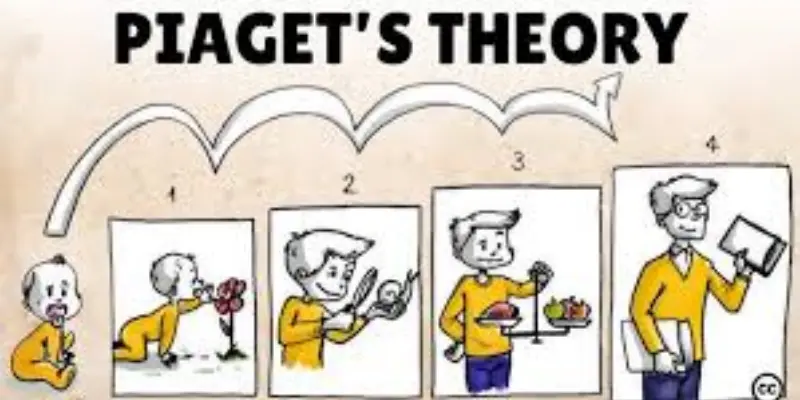
Understanding how children think, reason, and interpret reality offers valuable insight for parents, teachers, psychologists, clinicians, and researchers. It also helps identify developmental delays, learning difficulties, and individual differences in cognitive growth.
What Are Piaget’s Stages of Development?
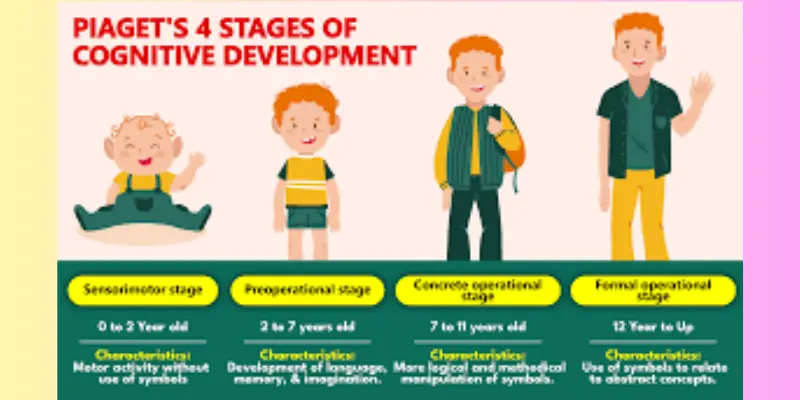
Piaget identified four major stages of cognitive development:
- Sensorimotor Stage (Birth–2 years)
- Preoperational Stage (2–7 years)
- Concrete Operational Stage (7–11 years)
- Formal Operational Stage (11+ years)
These stages reflect qualitative changes in how children learn, reason, categorize, and engage in abstract thinking.
Each stage marks developmental milestones in memory, language, symbolic reasoning, logic, and problem-solving — key areas of cognition.
Stage 1: Sensorimotor Stage (Birth–2 years)
The Sensorimotor Stage focuses on sensory exploration and motor coordination. Infants learn through movement, touch, sight, hearing, and interaction with objects.
During this period, babies transition from reflex-driven responses to goal-directed actions, object manipulation, and early problem-solving.
Core Milestones
- Development of reflexes
- Intentional grasping and reaching
- Understanding cause and effect
- Early memory and object recognition
- Symbolic thought beginnings
Major Achievement: Object Permanence
Object permanence means understanding that objects continue to exist even when out of sight. For example, a baby searches for a hidden toy rather than assuming it disappears.
Examples in Real Life
- Dropping objects repeatedly to test gravity
- Searching for caregivers during hide-and-seek
- Smiling in anticipation of familiar routines
Supporting Cognitive Skills
Parents can encourage this stage through:
- Peek-a-boo games
- Sensory toys
- Object tracking activities
- Early language exposure
Stage 2: Preoperational Stage (2–7 years)
During the Preoperational Stage, symbolic thinking, language development, and imagination flourish. Children engage in pretend play, storytelling, and creative thinking.
However, limitations such as egocentric thinking, irreversibility, and lack of logical reasoning are common during this stage.
Core Milestones
- Rapid vocabulary expansion
- Symbolic representation (drawings, play)
- Role-playing and imagination
- Understanding basic categories
- Improved memory and language
Egocentrism
Children assume others see the world as they do. For example, a child may assume the parent knows exactly what they are thinking.
Animism
Children believe inanimate objects have feelings or intentions, such as a teddy bear being “hungry” or a car being “sad.”
Conservation Limitations
Children struggle with conservation tasks — understanding that quantity remains constant despite changes in shape or arrangement.
Common Learning Activities
- Drawing and coloring
- Fantasy play
- Early storytelling
- Vocabulary games
- Matching and categorizing tasks
Stage 3: Concrete Operational Stage (7–11 years)
During the Concrete Operational Stage, children develop logical thinking, problem-solving skills, and understanding of relationships between objects.
They begin to grasp conservation, reversibility, time, and sequence. Cognitive functions become more structured, though abstract reasoning remains limited.
Core Milestones
- Logical reasoning
- Conservation (volume, mass, number)
- Improved mathematical thinking
- Seriation (ordering objects)
- Perspective-taking
- Decentering & classification skills
Example Conservation Tasks
- Two equal amounts of water poured into containers of different shapes
- The number of coins spread out vs grouped together
Educational Implications
Teachers can leverage this stage through:
- Science experiments
- Math exercises
- Sorting and grouping tasks
- Timeline activities
- Real-world classification tasks
Stage 4: Formal Operational Stage (11+ years)
The Formal Operational Stage marks maturity in abstract reasoning, logical problem-solving, and hypothetical thinking.
Adolescents can think critically, plan long-term, and understand moral dilemmas, social perspectives, and philosophical ideas.
Core Milestones
- Abstract reasoning
- Hypothetical thinking
- Deductive reasoning
- Scientific and mathematical logic
- Metacognition (thinking about thinking)
- Ethical and moral reasoning
Examples in Real Life
- Solving algebraic equations
- Debating social issues
- Long-term academic planning
- Evaluating hypothetical scenarios
Key Cognitive Concepts in Piaget’s Theory
Several foundational concepts explain how children progress through the stages:
1. Schemas
Schemas are mental frameworks that help process and categorize information. For example, a child may develop a “dog” schema and later differentiate dogs from cats.
2. Assimilation
Assimilation occurs when new information fits into existing schemas. A child may call all four-legged animals “dogs” initially.
3. Accommodation
Accommodation happens when schemas are adjusted to fit new information, such as realizing not all four-legged animals are dogs.
4. Equilibration
Equilibration balances assimilation and accommodation, driving cognitive growth and learning.
Developmental Milestones Table
| Stage | Age Range | Key Cognitive Skills | Examples |
|---|---|---|---|
| Sensorimotor | 0–2 yrs | Object permanence, cause-effect, sensory learning | Peek-a-boo, toy search |
| Preoperational | 2–7 yrs | Symbolic thought, imagination, language | Pretend play, drawing |
| Concrete Operational | 7–11 yrs | Logic, conservation, math skills | Grouping, sequencing |
| Formal Operational | 11+ yrs | Abstract reasoning, hypotheses | Algebra, debates |
Pros & Cons of Piaget’s Theory
| Strengths | Weaknesses |
|---|---|
| Influential in modern education | Underestimates abilities of young children |
| Clear stage structure | Limited cultural/context factors |
| Explains cognitive milestones | Lack of individual variability |
| Encourages active learning | Less attention to social learning |
| Useful for curriculum design | Not always linear in real life |
Piaget vs. Vygotsky Comparison (Brief)
| Feature | Piaget | Vygotsky |
|---|---|---|
| Focus | Individual cognition | Social cognition |
| Learning | Self-initiated | Guided/Scaffolded |
| Language | Product of thought | Tool for thought |
| Stages | Universal stages | Cultural variability |
Cognitive Delays & Concerns
While many children fit typical timelines, some may experience variations due to:
- Neurodevelopmental disorders
- Learning difficulties
- Speech-language delays
- Intellectual disabilities
- Environmental deprivation
Early screening and intervention can support improved outcomes.
PIAGET Stages in Education
Piaget’s theory supports constructivist learning, emphasizing:
- Discovery-based learning
- Manipulative learning materials
- Hands-on activities
- Self-paced exploration
- Problem-solving tasks
Modern classrooms integrate these principles into STEM, Montessori, and Reggio Emilia approaches.
Frequently Asked Questions (FAQs)
1. What are Piaget’s four stages of development?
Sensorimotor, Preoperational, Concrete Operational, and Formal Operational stages.
2. Why is Piaget’s theory important?
It explains how children think, learn, reason, and understand the world across developmental periods.
3. Is Piaget’s theory still relevant today?
Yes. It influences education, child psychology, and developmental science, although updated with modern research.
4. What is conservation in Piaget’s theory?
Conservation means quantity remains constant despite changes in shape or arrangement, tested through classic tasks.
5. Do children always progress through stages at exact ages?
No. Ages are approximate and influenced by individual, cultural, and environmental factors.
6. Can cognitive development be accelerated?
Stimulation, enriched environments, and supportive learning can enhance skills, but some developmental processes unfold naturally.
Summary
The Piaget Stages of Development remain a foundational framework for understanding cognitive development from infancy through adolescence. Piaget’s theory highlights how children construct knowledge through exploration, interaction, and problem-solving rather than passive learning. Each stage introduces new cognitive abilities, from sensory awareness to abstract reasoning.
While modern research adds nuance and emphasizes cultural, social, and neurological influences, Piaget’s contributions continue to shape educational practices, child assessment, and theories of intelligence. Understanding these stages benefits caregivers, teachers, clinicians, and anyone seeking insight into how children learn and evolve cognitively.
Conclusion of Piaget Stages of Development
The Piaget Stages of Development remain one of the most influential frameworks for understanding how children think, learn, and make sense of the world. Piaget demonstrated that cognitive development unfolds in structured stages, progressing from sensory exploration to symbolic thinking, concrete logic, and finally to abstract reasoning. This transformation reveals that intelligence is not fixed but continually constructed through experiences, problem-solving, and social interaction.
Although modern research acknowledges that development is more flexible and culturally influenced than Piaget originally proposed, the theory continues to inform early childhood education, curriculum design, developmental psychology, and parenting practices worldwide. Piaget’s contribution lies less in perfect accuracy and more in shifting the dialogue from what children know to how they learn and why their thinking changes over time.
Understanding these stages helps caregivers, educators, clinicians, and researchers better support cognitive milestones, identify developmental delays, and create environments that encourage curiosity, experimentation, and critical thinking. In this sense, Piaget’s legacy remains foundational to both theory and practice in child development.
Please Write Your Comments