Child Development Stages: A Complete Guide for Parents & Educators
Updated: 22/01/2026
167
Child development stages refer to the predictable physical, cognitive, emotional, and social milestones children typically achieve from infancy through adolescence. These Developmental Milestones reflect how children grow, learn, communicate, interact, and build independence. Understanding the child developmental is essential for parents, educators, child psychologists, pediatricians, and caregivers who aim to promote healthy growth and early learning.
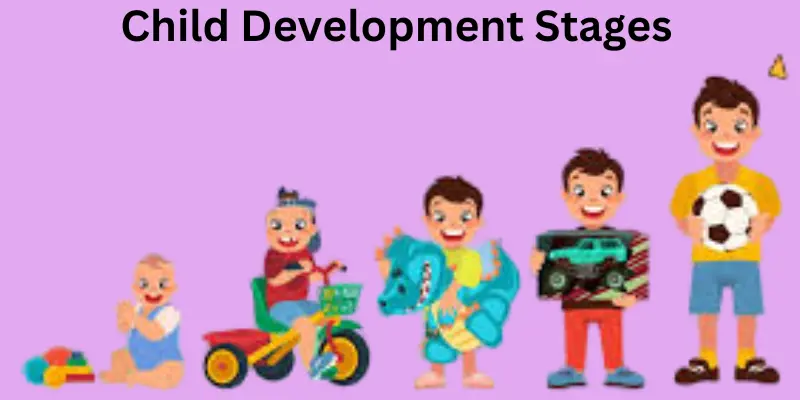
From infant reflexes and language acquisition to abstract reasoning and identity formation, every developmental stage shapes a child’s long-term wellbeing. Although development is universal, each child’s pace may vary due to genetics, environment, nutrition, culture, family dynamics, and learning opportunities. Recognizing that “normal” development is a spectrum rather than a rigid timeline is key to meaningful support.
Why Understanding Child Development Stages Matters
Knowing child development stages helps adults identify what children need at each age and how to support their learning, emotional regulation, social adjustment, and personality growth. It also allows for early detection of developmental delays, behavioral issues, and learning disorders such as autism spectrum disorder (ASD), dyslexia, ADHD, or language impairment.
In modern parenting, schools and healthcare, understanding developmental stages is connected to:
Early childhood education planning
Personalized parenting approaches
Speech & language therapy referrals
Social-emotional learning (SEL)
Pediatric health screenings
Positive discipline strategies
Child mental health awareness
Major Child Development Stages (Age-Wise Breakdown)
1. Infancy (0–12 Months)
The infancy stage is characterized by rapid physical growth, sensory development, reflexes, and attachment formation. Babies learn to communicate through crying, cooing, gestures, and facial expressions. Motor development transitions from head control to crawling to standing, laying the foundation for future milestones.
Key developmental milestones in infancy:
- Sensory awareness and visual tracking
- Social smiling and eye contact
- Babbling and vocal experimentation
- Stranger anxiety and attachment bonds
- Grasping reflex and object exploration
This stage builds early cognitive mapping, trust, sensory processing, and emotional security, often influenced by parental responsiveness and nurturing.
2. Toddler Stage (1–3 Years)
Toddlers become explorers with growing autonomy, motor skills, and language acquisition. Speech accelerates as toddlers form first words, two-word phrases, and short sentences. They recognize themselves in mirrors, express preferences, assert independence, and begin parallel play.
Core milestones include:
- Walking and running
- Object manipulation and problem solving
- Self-feeding and toilet learning
- Vocabulary explosion (up to 200–1000+ words)
- Emotional expression and tantrums
- Imitation of adult actions
Cognitively, toddlers operate in Piaget’s sensorimotor preoperational transition, laying early foundations for symbolic thinking, imagination, and classification.
3. Preschool Stage (3–5 Years)
During preschool years, children engage in imaginative play, symbolic thinking, early numeracy, phonemic awareness, and emotional regulation. Social development becomes more structured as children learn cooperation, empathy, rule-based games, and conflict resolution.
Key preschool milestones:
- Expanded vocabulary and storytelling
- Fine motor control for drawing/writing
- Basic counting, sorting & categorization
- Moral awareness (right vs wrong)
- Improved impulse control
- Understanding emotions in self & others
Preschoolers also demonstrate increased curiosity, asking “why” questions, and experimenting with cause-effect learning—skills crucial for kindergarten readiness.
4. Early School Age (5–8 Years)
In early school age, children transition to formal learning environments requiring attention, discipline, routines, and academic performance. Cognitive development becomes more logical, systematic, and rule-bound.
Typical milestones include:
- Reading and writing fluency
- Numeracy (addition, subtraction, patterns)
- Social identity and peer friendships
- Improved emotional regulation
- Self-esteem tied to competence
- Participation in group activities
Erikson’s stage “Industry vs Inferiority” emerges as children compare themselves to peers, developing confidence or insecurity in their abilities.
5. Middle Childhood (8–12 Years)
Middle childhood emphasizes intellectual refinement, moral development, and self-concept. Children handle multi-step instructions, understand fairness, negotiate friendships, and engage in teamwork.
Milestones include:
- Abstract thought precursors
- Perspective taking & empathy
- Long-term memory improvement
- Organized sports & hobbies
- Identity curiosity & self-evaluation
- Social grouping & peer acceptance
Environmental influences such as schooling, nutrition, family culture, digital exposure, and socioeconomic conditions significantly impact development during this stage.
6. Adolescence (12–18 Years)
Adolescence is a transformative period involving puberty, psychological identity formation, emotional complexity, and independence. Cognitive abilities shift toward abstract reasoning, ethics, problem-solving, risk assessment, and future planning.
Key adolescent milestones:
- Pubertal changes and sexual maturity
- Self-identity and autonomy
- Emotional volatility & impulse control
- Peer influence and social belonging
- Romantic interest development
- Career and academic orientation
Erikson’s stage “Identity vs Role Confusion” captures the challenge of forming beliefs, values, and adult identity.
Domains of Child Development Stages
To align with modern child psychology and pediatrics, development is categorized into five essential domains:
1. Physical Development
Growth patterns, motor skills, puberty, sensory development
2. Cognitive Development
Learning, perception, memory, reasoning, problem solving
(major theories: Piaget, Vygotsky, Information Processing)
3. Social Development
Relationships, social norms, peer interaction, cooperation
4. Emotional Development
Emotion recognition, regulation, empathy, self-confidence
(tied to mental health and attachment theory)
5. Language & Communication Development
Speech, vocabulary, syntax, reading, literacy & comprehension
(critical for academic success)
Developmental Milestones & Variations
Milestones offer a reference for typical development, but every child follows a unique timeline. Differences may emerge due to:
genetics
parenting style
nutrition
cultural expectations
early education exposure
environmental stressors
neurodiversity
These factors explain why assessing children more holistically is more meaningful than comparing strict timelines.
Developmental Delays & Early Intervention
Early detection of developmental delays can significantly improve outcomes. Delays may involve:
- Speech & language delay
- Motor delays
- Social communication delay
- Cognitive learning difficulties
- Behavioral & emotional dysregulation
Early intervention therapies may include:
Speech therapy
Occupational therapy (OT)
Behavioral therapy
Early childhood special education
Pediatric developmental screenings
Modern pediatric recommendations emphasize screening in the first three years to catch neurodevelopmental differences such as ASD or ADHD.
How Child Developmental Stages Affect Children
Child developmental stages influence nearly every dimension of a child’s life, including learning, behavior, communication, emotions, social skills, confidence, and long-term mental health. Early stages affect brain architecture, language growth, emotional regulation, and attachment patterns—building the base for future academic and social success. Later stages influence identity formation, decision-making, moral reasoning, independence, and career exploration.
When developmental needs at each stage are met, children tend to thrive; when needs are ignored, mismatched, or unsupported, development can become delayed or disrupted. Understanding how stages affect children enables better parenting strategies, targeted education, early therapy/referrals, and healthier transition into adulthood.
Cultural & Environmental Factors
Child development is not universal in pace or expression. Cultural values, digital exposure, family systems, and lifestyle play a critical role.
For example:
- Some cultures prioritize independence early
- Others focus on obedience, collectivism, or academic rigor
- Screen time affects attention & social skills
- Nutrition impacts physical & cognitive development
- Trauma and stress influence mental health and regulation
Understanding these influences supports more inclusive and equitable developmental expectations.
Nature vs Nurture in Developmental Stages
Modern research shows child development is shaped by both:
The progression of child development stages is influenced by both nature (biology, genetics, brain development, temperament) and nurture (family, education, culture, environment, relationships). Nature provides the biological blueprint for growth—such as motor skills, puberty, and cognitive potential—while nurture shapes how these traits are expressed through learning, experiences, and social interactions.
Modern developmental science suggests that nature and nurture do not compete; instead, they interact continuously. For example, language ability may be biologically wired, but vocabulary, fluency, and communication skills depend heavily on parental interaction, schooling, and environmental exposure. Understanding this interplay helps explain why children develop differently even within the same age group.
Nature (heredity, biology, genetics)
and
Nurture (environment, relationships, learning, experiences)
Rather than either/or, science suggests development results from continuous interaction between the two.
FAQs
Q1: What are child development stages?
Child development stages are age-based milestones describing how children grow physically, cognitively, emotionally, socially, and linguistically.
Q2: Why are developmental stages important?
They help parents, educators, and healthcare professionals understand growth patterns and identify early delays.
Q3: What affects a child’s development?
Genetics, environment, parenting style, culture, nutrition, digital exposure, socioeconomic factors, and education.
Q4: What is the most crucial stage of child development?
The first five years are widely considered foundational due to rapid brain development and early learning.
Q5: What are developmental delays?
Delays occur when a child doesn’t meet age-appropriate milestones, which may require screening, therapy, or early intervention.
Q6: Do all children develop the same way?
No. Development varies by individual differences, neurodiversity, cultural expectations, and life experiences.
Summary on Child Development Stages
Child development stages outline how children grow physically, intellectually, socially, and emotionally from infancy through adolescence. These stages help parents, caregivers, psychologists, and educators understand what skills and behaviors are expected at different ages, and how to best support learning and wellbeing.
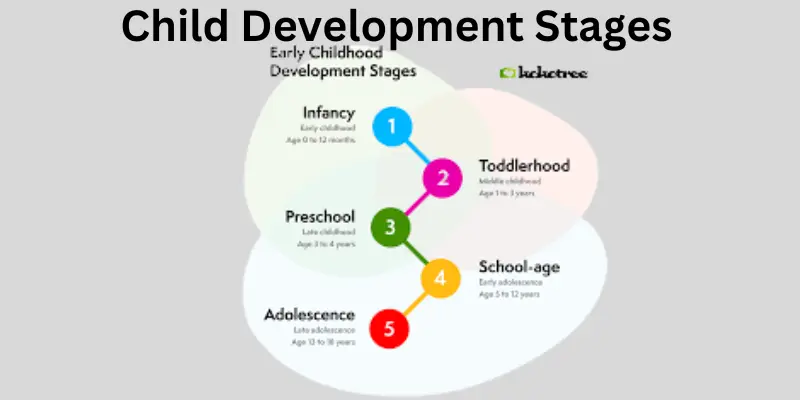
Although developmental milestones provide useful benchmarks, development is not a rigid timeline—each child progresses at their own pace based on genetics, environment, and life experiences. A holistic understanding of these stages ensures better support, early intervention when needed, and improved long-term outcomes for health, education, and mental resilience.
Conclusion
Understanding child development stages offers a roadmap for supporting children’s growth, learning, and lifelong emotional resilience. While milestones provide valuable benchmarks, development is not uniform or linear. The most effective approach recognizes individual differences, cultural contexts, and modern developmental science, encouraging supportive environments that foster curiosity, empathy, confidence, and wellbeing.
Please Write Your Comments