Different Types of Psychology: A Guide to Major Branches & Career Paths
Updated: 11/01/2026
157
Introduction
Psychology is the scientific study of the human mind, behavior, emotions, cognition, and mental processes. From understanding child development to diagnosing mental health disorders, different types of psychology provide powerful tools to analyze and improve human experience. In this comprehensive guide, we’ll explore major branches like clinical psychology, cognitive psychology, developmental psychology, and more — including real‑world applications, career paths, and expert insights.
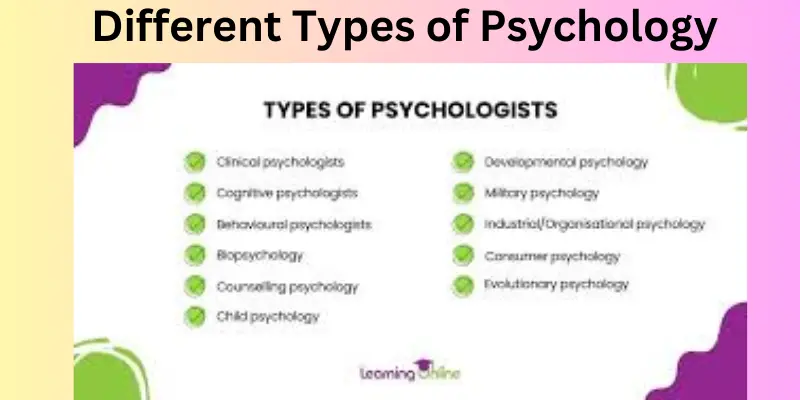
This article is ideal for students, career seekers, professionals, and anyone curious about the different types of psychology careers, psychology fields of study, and how psychological theories impact everyday life.
What Is Psychology?
Psychology is a multifaceted discipline rooted in science and human behavior. It combines empirical research, clinical practice, and theoretical frameworks to help us make sense of perception, emotion, cognition, personality, and behavior patterns.
Key goals of psychology include:
- Understanding human behavior
- Predicting responses based on environmental and biological factors
- Improving mental health and wellbeing
- Supporting decision‑making and problem solving
How Different Types of Psychology Work
Different types of psychology work by focusing on unique aspects of human behavior, cognition, emotion, development, and social interaction—yet they all use the scientific method. Here’s the general process of how psychology works as a discipline:
1. Observation & Identification
Psychologists start by identifying behaviors, symptoms, thought patterns, or social influences that require explanation.
2. Theory Development
They then apply or develop theories to explain why a behavior occurs, such as:
- Cognitive models (thinking)
- Behavioral models (conditioning)
- Biological models (brain & hormones)
- Social models (environment & group influence)
3. Research & Experimentation
Psychology relies on:
Surveys
Cognitive tests
Brain imaging
Behavioral experiments
Case studies
Statistical analysis
4. Diagnosis & Intervention (in clinical settings)
Clinical psychologists create treatment plans such as:
- Cognitive Behavioral Therapy (CBT)
- Talk therapy
- Exposure therapy
- Behavioral modification
5. Application of Findings
Different fields apply insights uniquely:
- Clinical psychology: treats disorders
- Educational psychology: improves learning
- I-O psychology: enhances workplace performance
- Health psychology: promotes wellness
- Developmental psychology: supports growth across lifespan
6. Outcomes & Evaluation
Psychologists measure whether interventions or theories improve:
Mental health
Learning outcomes
Workplace productivity
Social behavior
Cognitive performance
Overall, psychology works by combining science + observation + theory + application to improve human wellbeing.
Comparative Table of Different Types of Psychology
Below is a comparison of top 8 psychology branches for clarity:
| Psychology Type | Primary Focus | Key Methods | Typical Setting | Works With | Applications |
|---|---|---|---|---|---|
| Clinical Psychology | Mental health disorders & treatment | Testing, Psychotherapy, CBT | Hospitals, Clinics, Private Practice | Individuals | Anxiety, Depression, Trauma, PTSD |
| Cognitive Psychology | Memory, Thinking, Decision-Making | Experiments, Cognitive Tasks | Labs, Universities | Individuals | Education, AI, UX, Therapy |
| Developmental Psychology | Lifespan growth & change | Observation, Interviews, Tests | Schools, Research, Clinics | Children, Elderly | Learning ability, Aging, Parenting |
| Social Psychology | Social influence, behavior in groups | Experiments, Surveys | Academic, Corporations | Groups & Societies | Marketing, Social Change, Prejudice |
| Biological Psychology | Brain-behavior connections | fMRI, EEG, Genetics | Labs, Hospitals | Neurons & Systems | Neuroscience, Behavior, Medicine |
| Health Psychology | Mind-body wellness | Behavior Change Models | Hospitals, Public Health | Patients & Communities | Stress, Compliance, Chronic Illness |
| I-O Psychology | Workplace behavior & performance | Surveys, Training Models | Corporate, HR, Consulting | Organizations | Hiring, Productivity, Culture |
| Educational Psychology | Learning processes & instruction | Classroom Study, Testing | Schools, Universities | Students & Teachers | Learning disabilities, Teaching |
Different Types of Psychology
Clinical Psychology – Healing Minds
Clinical psychology focuses on diagnosing and treating mental health disorders. Professionals in this field are trained to provide psychotherapy, conduct behavioral assessments, and create treatment plans for conditions like anxiety, depression, PTSD, and schizophrenia.
Core Concepts
- Psychological assessment
- Cognitive Behavioral Therapy (CBT)
- Psychopathology analysis
- Evidence‑based treatment plans
Careers in Clinical Psychology
- Clinical Psychologist
- Licensed Professional Counselor
- Behavioral Therapist
- Mental Health Specialist
Clinical psychologists often work in hospitals, private practice, mental health clinics, and research institutions.
Cognitive Psychology – Understanding Thought Processes
Cognitive psychology studies internal mental processes such as memory, perception, language, problem‑solving, and decision‑making.
Why It Matters
Cognitive psychologists seek to answer:
- How do we remember information?
- What processes guide reasoning?
- How do perception and attention influence behavior?
This branch influences neuroscience research, educational psychology, and human‑computer interaction.
Developmental Psychology – Lifelong Growth
Developmental psychology analyzes how people grow and change throughout life—from infancy to old age.
Key Areas of Study
- Cognitive development in children
- Social development during adolescence
- Aging and memory in older adults
- Emotional regulation across the lifespan
Educators, child psychologists, and social workers often apply developmental theory in real‑world settings.
Social Psychology – How People Interact
Social psychology examines how individuals think and behave in social contexts. It explores group behavior, social perception, leadership, aggression, conformity, and prejudice.
Real‑World Application
- Reducing discrimination
- Improving workplace collaboration
- Understanding group dynamics
- Influencing positive social change
Social psychologists use experiments and observational studies to reveal how social influences shape behav
Biological Psychology – Behavior & the Brain
Biological psychology (or biopsychology) focuses on the connection between the brain, nervous system, and behavior. This field overlaps with neuroscience and genetics.
Topics Covered
- Brain structure and function
- Neurotransmitters and behavior
- Hormones and emotional regulation
- Biological bases of mental health disorders
Professionals in this area often work in neuropsychology labs, medical settings, or research institutions.
Health Psychology – Mind‑Body Connection
Health psychology studies how psychological factors influence physical health and illness. It emphasizes stress management, chronic disease prevention, and health behavior change.
Practical Use Cases
- Helping patients adhere to medical advice
- Designing wellness programs
- Studying how stress impacts immunity
Health psychologists play a crucial role in hospitals, community clinics, and public health agencies.
Industrial‑Organizational Psychology – Work & Behavior
Industrial‑organizational (I‑O) psychology applies psychological principles to the workplace. It tackles hiring, training, performance evaluation, organizational behavior, and employee wellbeing.
Core Functions
- Talent management
- Workplace motivation
- Job satisfaction analysis
- Organizational development
I‑O psychologists are essential in corporate HR teams, consulting firms, and leadership training programs.
Educational Psychology – Learning & Teaching
Educational psychology explores how people learn and how instructional methods, classroom environments, and educational tools influence learning outcomes.
Impact Areas
- Learning disabilities interventions
- Motivation strategies for students
- Curriculum design
- Classroom behavior management
Teachers, school counselors, and curriculum developers use this branch to enhance educational success.
Forensic Psychology – Law & Behavior
Forensic psychologists bridge psychology and the legal system. They assess competency, provide expert testimony, work in criminal profiling, and support rehabilitation programs.
Responsibilities
- Evaluating criminal behavior
- Assisting juries with psychological insights
- Consulting on legal cases
- Mental health assessment for sentencing
Forensic psychology requires strong ethical training and legal knowledge.
Positive Psychology – Strength‑Based Wellbeing
Positive psychology focuses on what makes life fulfilling and meaningful. Instead of pathology, it emphasizes strengths, resilience, happiness, and flourishing.
Key Concepts
- Optimism
- Gratitude practice
- Well‑being interventions
- Strengths assessment
This field is widely used in coaching, therapy, and organizational wellbeing strategies.
Comparative Psychology – Animals & Behavior
Comparative psychology studies behavior across species to understand evolutionary and biological influences on behavior. It helps inform both animal welfare and human psychology.
Areas of Research
- Animal learning
- Behavioral adaptation
- Evolutionary behavior patterns
This type of psychology strengthens scientific understanding of universal behavior principles.
Sport Psychology – Performance & Mindset
Sport psychology supports athletes’ mental performance, motivation, anxiety management, and team dynamics.
Applications
- Performance enhancement
- Goal‑setting strategies
- Mental resilience building
Sports psychologists work with teams, individual athletes, and performance coaches.
How Psychology Types Interrelate
Although distinct, these types of psychology often overlap:
- Clinical & Health Psychology collaborate on stress and chronic illness
- Social & Developmental Psychology examine behavior across ages
- Cognitive & Educational Psychology intersect in learning research
A multidisciplinary understanding helps professionals adopt evidence‑based solutions tailored to real‑world problems.
Psychology vs. Psychiatry vs. Neuroscience
Brief Explanation
These three fields all study the mind and brain, but they differ in purpose, methods, treatment, and academic background:
- Psychology focuses on behavior, cognition, and mental processes
- Psychiatry focuses on diagnosing & treating mental disorders using medication
- Neuroscience focuses on the brain, nervous system, and biological mechanisms
Comparison Table — Psychology vs. Psychiatry vs. Neuroscience
| Feature | Psychology | Psychiatry | Neuroscience |
|---|---|---|---|
| Primary Focus | Behavior, emotions, cognitive processes | Mental disorders, diagnosis & medication | Brain, nervous system, biological mechanisms |
| Approach | Therapeutic & research-based | Medical & clinical | Scientific & experimental |
| Degree Required | BA/BS → MA/MS → PhD/PsyD | MD + psychiatry residency | BS → MS → PhD or MD/PhD |
| Uses Medication? | No (except research) | Yes (prescribes medication) | No (except research) |
| Treatment Orientation | Talk therapy, CBT, assessments | Medication + therapy | Research, imaging, biological analysis |
| Typical Settings | Clinics, schools, labs, private practice | Hospitals, psychiatric units, clinics | Labs, hospitals, research centers |
| Key Disorders Treated | Depression, anxiety, trauma, behavior issues | Bipolar, schizophrenia, severe depression | Neurological disorders (Alzheimer’s, epilepsy) |
| Licensing Title | Psychologist | Psychiatrist | Neuroscientist |
| Major Tools | Tests, therapy models, interviews | Medication, clinical exams, psychotherapy | MRI, EEG, genetics, molecular biology |
| Overlap | Mental health & behavior | Mental health & pharmacology | Brain science & biology |
Popular Career Outcomes
| Field | Example Careers |
|---|---|
| Psychology | Clinical Psychologist, Therapist, I-O Psychologist |
| Psychiatry | Psychiatrist, Addiction Psychiatrist, Neuropsychiatrist |
| Neuroscience | Neurologist (MD), Neuroscientist (PhD), Neuropsychologist |
Where They Intersect
All three collaborate in mental health settings:
- Psychiatry treats disorders medically
- Psychology provides therapy & assessments
- Neuroscience provides brain-based explanations and research
Clinical Psychology vs. Counseling Psychology
Brief Explanation
These two branches are close but not identical.
- Clinical Psychology deals more with serious mental health disorders, psychopathology, trauma, and diagnostics
- Counseling Psychology focuses more on life challenges, personal development, stress, and emotional wellbeing
Both provide therapy, but their populations, training models, and settings differ.
Comparison Table — Clinical vs. Counseling Psychology
| Feature | Clinical Psychology | Counseling Psychology |
|---|---|---|
| Primary Focus | Mental disorders & psychopathology | Life adjustment, wellness & coping |
| Common Issues | Depression, PTSD, bipolar, schizophrenia | Stress, relationships, career, anxiety |
| Treatment Approach | Diagnosis + therapy + testing | Talk therapy + humanistic + behavioral work |
| Severity of Cases | Moderate to severe | Mild to moderate |
| Populations | Broad clinical populations | Healthy individuals, students, workers |
| Training Orientation | Medical/diagnostic (DSM-based) | Developmental + humanistic |
| Work Settings | Hospitals, clinics, mental health centers | Schools, campuses, private practice |
| Assessment Tools | Psychological testing, clinical scales | Interview-based assessments |
| Degree Path | PhD or PsyD (clinical track) | MA, MS, PhD (counseling track) |
| Overlap | Both use CBT, therapy models, and support mental health |
Education & Career Pathways
Most psychology careers require:
Bachelor’s degree in Psychology
Master’s or Doctoral degree (for clinical, counseling, research roles)
Professional certification/license (for clinical practice)
Internship or supervised experience
Students may specialize early in areas like child psychology, neuropsychology, or organizational behavior, depending on interests.
Choosing the Right Psychology Field for You
Ask yourself:
- Do you want to work clinically with patients?
- Are you drawn to research or academia?
- Do you prefer working with organizations or individuals?
- Are you interested in brain science, education, or social change?
Your answers will guide your specialization.
Benefits of Studying Psychology
Studying psychology builds:
- Critical thinking skills
- Emotional intelligence
- Research and analysis capability
- Communication and counseling skills
- Cultural and social awareness
These skills are valuable in healthcare, education, business, public policy, and technology fields.
Frequently Asked Questions (FAQs)
1. What are the main types of psychology?
The main types include clinical, cognitive, developmental, social, biological, health, industrial‑organizational, educational, forensic, and positive psychology.
2. Which psychology field has the highest job growth?
Fields like clinical psychology, health psychology, and industrial‑organizational psychology are growing due to increased demand for mental health services and workplace wellbeing programs.
3. What is the difference between clinical and counseling psychology?
Clinical psychology often focuses on serious mental disorders and psychopathology, while counseling psychology emphasizes life challenges, stress management, and personal development.
4. Can you work in psychology with a bachelor’s degree?
Yes, bachelor’s degree holders can work in related roles like research assistant, case manager, and HR technician, but clinical and advanced specialist roles typically require a graduate degree.
5. Is psychology a science or a social science?
Psychology is both a science and a social science. It uses scientific methods to study behavior, cognition, and emotions in social contexts.
6. Which psychology career pays the most?
Specialized areas like neuropsychology, industrial‑organizational psychology, and clinical psychology with licensure often offer higher salaries, especially in private practice or corporate settings.
Summary: Different Types of Psychology
Psychology is a broad scientific field that examines the mind, behavior, and mental processes. Over time, the discipline has evolved into numerous branches, each dedicated to understanding a specific dimension of human experience. Clinical psychology focuses on diagnosing and treating mental health disorders, while cognitive psychology analyzes internal mental processes like memory, decision-making, and problem-solving. Developmental psychology studies how people grow and change across the lifespan, and social psychology explores how societal and group dynamics influence behavior.
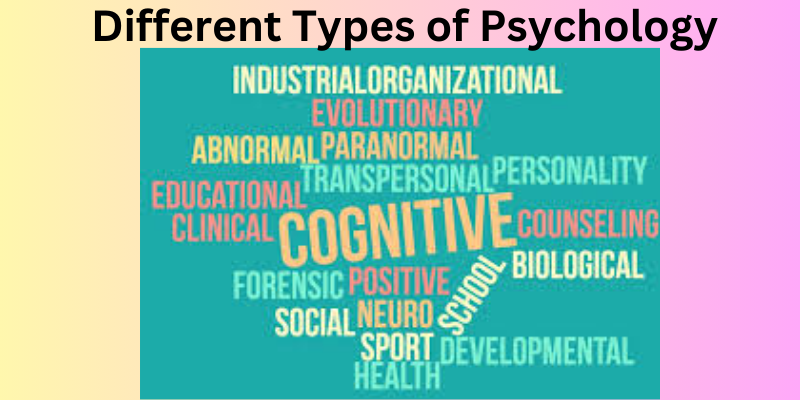
Other specialized types — such as biological psychology, health psychology, and industrial-organizational psychology — apply scientific principles to fields like medicine, public health, and workplace performance. Additional emerging areas, including forensic psychology, sport psychology, and positive psychology, demonstrate how psychology continues to expand into new applied settings.
Together, these branches illustrate how psychology works across therapy, research, education, health, and industry to improve wellbeing, understand behavior, and enhance human potential. Understanding the different types of psychology helps individuals choose career paths, identify mental health resources, and appreciate the complexity of the human mind.
Conclusion
Understanding the different types of psychology empowers you to make informed educational and career decisions. Whether you’re passionate about helping people heal, advancing scientific research, or improving workplace performance, psychology positions you to make a meaningful impact.
Discover your path — from clinical practice to cognitive research — and unlock the power of the mind.
Please Write Your Comments