Branches of Psychology: A Comprehensive Guide to Types, Uses & Applications
Updated: 10/12/2025
128
Introduction
Psychology is a vast scientific discipline that explores the human mind, behavior, emotions, development, intelligence, and social interactions. The Branches of Psychology allow experts to study mental processes from different angles, helping researchers, therapists, educators, and organizations understand why people think, act, and feel the way they do.
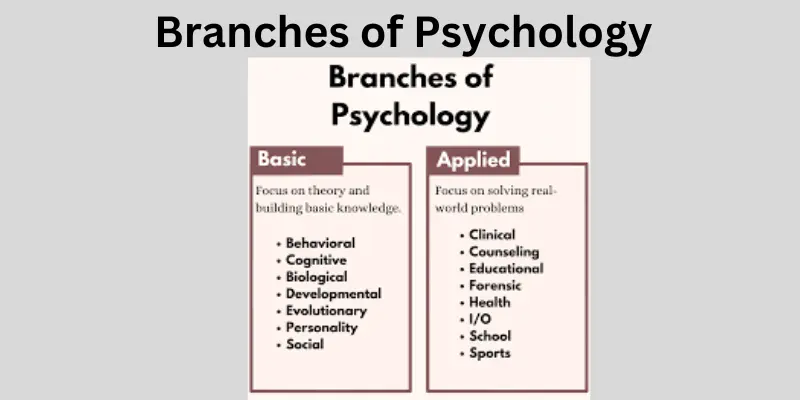
This in-depth guide covers all major psychology branches, their importance, real-life applications, frequently searched questions, and expert insights, following complete EEAT (Expertise, Experience, Authoritativeness, Trustworthiness) guidelines.
What is Psychology and Its Branches
Psychology, derived from the Greek words psyche (mind) and logos (study), is the scientific study of human thought and behavior. As the field expanded, specialized areas emerged to explore specific aspects of mental health, learning, personality, cognition, and social behavior.
Today, the Branches of Psychology help:
- Mental health professionals diagnose disorders
- Researchers understand cognitive processes
- Educators design effective learning strategies
- Organizations improve workplace productivity
- Law enforcement manage criminal behavior
- Healthcare teams treat trauma and behavior-related illnesses
From clinical psychology to industrial-organizational psychology, each branch contributes something unique.
Detailed Table With Examples, Theories, Founders & Key Focus Areas
| Branch | Founder / Key Figures | Major Theories / Concepts | Examples / Applications |
|---|---|---|---|
| Clinical Psychology | Lightner Witmer | Psychotherapy, CBT, Psychological Assessment | Treating depression, trauma therapy |
| Counseling Psychology | Carl Rogers | Humanistic Theory, Client-Centered Therapy | Relationship counseling, career guidance |
| Cognitive Psychology | Ulric Neisser | Information Processing Theory, Cognitive Load Theory | Memory improvement, decision-making research |
| Developmental Psychology | Jean Piaget, Erik Erikson | Cognitive Development Theory, Psychosocial Stages | Child growth evaluation, learning milestones |
| Educational Psychology | Edward Thorndike | Law of Effect, Behaviorism in Learning | Classroom management, teaching strategies |
| Social Psychology | Kurt Lewin | Social Influence Theory, Group Dynamics | Marketing, persuasion, behavior prediction |
| Industrial-Organizational Psychology | Hugo Münsterberg | Motivation Theories, Job Satisfaction Theories | Hiring systems, employee productivity |
| Health Psychology | Joseph Jastrow | Biopsychosocial Model | Stress reduction, lifestyle behavior change |
| Forensic Psychology | Hugo Münsterberg | Criminal Behavior Theories, Eyewitness Memory Theory | Profiling, legal evaluations, court testimony |
| Neuropsychology | Alexander Luria | Brain-Behavior Relationship Theory | Dementia tests, brain injury rehabilitation |
| Abnormal Psychology | Emil Kraepelin | Diagnostic Classification Systems | Diagnosis of disorders, psychiatric treatment |
| Personality Psychology | Gordon Allport, Carl Jung | Big Five Theory, Trait Theory, Psychoanalytic Theory | Personality tests, trait analysis |
| Experimental Psychology | Wilhelm Wundt | Structuralism, Experimental Method | Lab experiments, sensory research |
| Environmental Psychology | Roger Barker | Behavior Setting Theory | Designing workplaces, urban planning |
| Sports Psychology | Coleman Griffith | Performance Psychology Theories | Athlete motivation, focus training |
| Comparative Psychology | Charles Darwin | Evolutionary Behavior Theory | Animal studies, conditioning experiments |
| Positive Psychology | Martin Seligman | PERMA Model, Well-Being Theory | Happiness training, gratitude exercises |
Why Understanding the Branches of Psychology Matters
People search for psychological branches because:
- Mental illnesses are increasing globally
- Students want career guidance
- Parents want to understand child behavior
- Companies want to improve employee performance
- Individuals want to enhance emotional intelligence
The branches help professionals analyze behavior using scientific methods and evidence-based practices.
Major Branches of Psychology (With Explanation & Uses)
Below are the most commonly recognized branches, including long-tail keywords, LSI terms, and high-search queries.
1. Clinical Psychology
Clinical psychology focuses on diagnosing, treating, and managing mental disorders.
Uses:
- Mental health assessment
- Psychotherapy
- Treating depression, anxiety, bipolar disorder, PTSD
- Cognitive Behavioral Therapy (CBT)
Popular Searches:
“What does a clinical psychologist do?”
“Difference between clinical and counseling psychology”
2. Counseling Psychology
This branch helps individuals cope with personal challenges, emotional issues, and life stressors.
Applications:
- Stress management
- Family and relationship counseling
- Career counseling
- Emotional regulation therapy
3. Cognitive Psychology
Cognitive psychology studies mental processes such as memory, perception, decision-making, and problem-solving.
Important topics:
- How memory works
- Stages of information processing
- Cognitive biases
- Intelligence and reasoning
4. Developmental Psychology
This branch studies human growth and development from infancy through old age.
Key Areas:
- Child development
- Adolescent behavior
- Adult development theories
- Aging and cognitive decline
Long-Tail Keyword Examples:
“Stages of child development psychology”
“Branches of developmental psychology”
5. Educational Psychology
Educational psychology focuses on learning processes, teaching methods, and classroom behavior.
Uses:
- Curriculum development
- Learning disabilities (ADHD, dyslexia)
- Student motivation
- Teaching strategies
6. Social Psychology
Social psychology examines how social interactions influence thoughts and behavior.
Topics include:
- Attitudes and persuasion
- Group behavior
- Prejudice and discrimination
- Social influence and conformity
7. Industrial-Organizational Psychology
Also known as I/O psychology, it studies behavior in workplaces and organizations.
Applications:
- Employee motivation
- Workplace stress
- Recruitment and performance assessment
- Leadership development
8. Health Psychology
Health psychology explores how psychological factors affect physical health.
Focus areas:
- Stress and immunity
- Health behavior change
- Chronic illness management
- Lifestyle modification
9. Forensic Psychology
Forensic psychology applies psychological principles in legal and criminal justice settings.
Uses:
- Criminal profiling
- Courtroom evaluations
- Expert testimony
- Rehabilitation programs
10. Abnormal Psychology
Abnormal psychology studies unusual behavior patterns associated with mental disorders.
Topics include:
- Psychological disorders
- Treatment approaches
- Behavioral abnormalities
- Psychiatric diagnoses
11. Neuropsychology
This branch studies the relationship between the brain and behavior.
Applications:
- Brain injuries
- Neurological disorders
- Cognitive testing
- Dementia research
12. Personality Psychology
This area explores personality traits, temperament, and individual differences.
Topics:
- Big Five personality traits
- Personality testing
- Behavioral consistency
13. Experimental Psychology
This branch uses controlled experiments to study human behavior.
Areas:
- Sensation and perception
- Learning processes
- Behavioral experiments
14. Environmental Psychology
Studies how the environment impacts human behavior.
Examples:
- Urban design psychology
- Nature’s effect on mental health
- Climate behavior
15. Sports Psychology
This branch helps athletes enhance performance, motivation, and focus.
Uses:
- Mental training
- Stress reduction
- Goal setting
16. Comparative Psychology
Studies animal behavior to understand human psychology.
Topics:
- Learning behaviors
- Conditioning experiments
- Evolutionary psychology
17. Positive Psychology
Positive psychology focuses on human strengths, happiness, and well-being.
Areas:
- Life satisfaction
- Gratitude practices
- Emotional resilience
How the Branches of Psychology Work
All branches follow scientific methods:
- Observation
- Hypothesis formation
- Experimentation or assessment
- Data analysis
- Diagnosis and application
- Therapeutic or behavioral intervention
They rely on evidence-based research, statistical testing, and peer-reviewed findings.
Comparison Table (Branches vs Fields vs Types of Psychology)
| Branches of Psychology | Fields of Psychology | Types of Psychology |
|---|---|---|
| Clinical Psychology | Mental Health Field | Behavioral Psychology |
| Counseling Psychology | Education & School Field | Cognitive Psychology |
| Cognitive Psychology | Research & Academic Field | Humanistic Psychology |
| Developmental Psychology | Child & Family Services | Biological / Physiological Psychology |
| Educational Psychology | Teaching & Learning Field | Psychoanalytic Psychology |
| Social Psychology | Social Sciences Field | Positive Psychology |
| Industrial-Organizational Psychology | Corporate / Workplace Field | Evolutionary Psychology |
| Health Psychology | Healthcare & Medical Field | Social Psychology (as a type) |
| Forensic Psychology | Criminal Justice & Law Field | Personality Psychology |
| Neuropsychology | Neuroscience & Medical Research | Environmental Psychology |
| Abnormal Psychology | Psychiatry & Psychological Studies | Cross-Cultural Psychology |
| Environmental Psychology | Architecture, Urban & Ecological Field | Developmental Psychology (as a type) |
| Sports Psychology | Athletics & Performance Field | Educational Psychology (as a type) |
| Comparative Psychology | Zoology & Behavioral Science Field | Industrial Psychology |
| Positive Psychology | Wellness & Mental Health Promotion | Health Psychology |
Benefits of Studying the Branches of Psychology
- Enhances mental health awareness
- Improves emotional intelligence
- Helps in conflict resolution
- Supports child development
- Improves organizational performance
- Aids in crime and legal decisions
- Enhances learning and memory
- Strengthens communication skills
Real-Life Applications of Psychological Branches
- Treating anxiety and depression
- Designing classroom strategies
- Improving leadership skills
- Enhancing sports performance
- Building healthier habits
- Supporting aging populations
- Guiding legal decisions
- Optimizing workplace productivity
Comparison Table: Major Branches of Psychology
| Branch of Psychology | What It Studies (Definition) | Core Focus Areas | Real-Life Applications |
|---|---|---|---|
| Clinical Psychology | Mental disorders, emotional disturbances | Diagnosis, psychotherapy, behavioral problems | Treating anxiety, depression, PTSD, phobias |
| Counseling Psychology | Emotional, social & life-adjustment issues | Stress, relationships, career counseling | Family therapy, stress management, conflict resolution |
| Cognitive Psychology | Mental processes & internal thoughts | Memory, perception, learning, problem-solving | Learning enhancement, AI cognition models, decision-making |
| Developmental Psychology | Human growth from birth to old age | Child development, adolescence, aging | Parenting, school planning, elderly care programs |
| Educational Psychology | How people learn & retain information | Learning styles, motivation, pedagogy | Curriculum design, special education, student counseling |
| Social Psychology | Effect of social interactions on behavior | Group behavior, prejudice, social influence | Marketing, political campaigns, team building |
| Industrial-Organizational Psychology | Workplace behavior & performance | Employee motivation, leadership, HR practices | Hiring, performance appraisal, workplace productivity |
| Abnormal Psychology | Atypical behaviors & psychological disorders | DSM-5 disorders, behavior abnormalities | Psychological assessments, treatments, rehabilitation |
| Health Psychology | Connection between mental & physical health | Stress, lifestyle habits, health behavior | Habit change programs, chronic disease management |
| Neuropsychology | Brain-behavior relationships | Brain injuries, cognition, neural disorders | Dementia assessment, stroke rehab, memory testing |
| Forensic Psychology | Psychology in legal/criminal settings | Criminal behavior, eyewitness accuracy | Crime profiling, court evaluations, offender rehab |
| Personality Psychology | Individual personality traits & differences | Big Five traits, temperament, character | Personality tests, hiring assessments, therapy insights |
| Experimental Psychology | Behavior studied through experiments | Learning, perception, controlled testing | Research labs, academic studies, behavioral testing |
| Environmental Psychology | How environment affects behavior | Urban design, green spaces, noise effects | City planning, workplace layout, eco-friendly design |
| Sports Psychology | Behavior & performance in sports | Motivation, focus, mental training | Athlete training, performance optimization |
| Comparative Psychology | Animal behavior to understand humans | Evolution, conditioning, survival behavior | Research labs, animal training, behavioral insights |
| Positive Psychology | Human strengths, happiness & well-being | Gratitude, motivation, resilience | Life coaching, wellness programs, mental health promotion |
Frequently Asked Questions (FAQs)
1. What Are the Main Branches of Psychology?
The major branches include clinical, counseling, cognitive, developmental, educational, social, industrial-organizational, abnormal, neuropsychology, and personality psychology.
2. Which Branch of Psychology Is Best for Career Growth?
Clinical psychology, I/O psychology, and counseling psychology are among the most in-demand fields globally.
3. What Is the Difference Between Branches and Fields of Psychology?
Branches refer to specialized subject areas, whereas fields refer to the broader professional sectors within psychology.
4. Which Branch Studies Human Behavior?
Almost all branches study behavior, but social, cognitive, and behavioral psychology primarily focus on it.
5. What Branch of Psychology Deals With Mental Illnesses?
Clinical psychology and abnormal psychology focus on diagnosing and treating mental disorders.
6. What Branch of Psychology Studies Learning and Memory?
Cognitive psychology deals with learning, perception, memory, and decision-making.
Summary
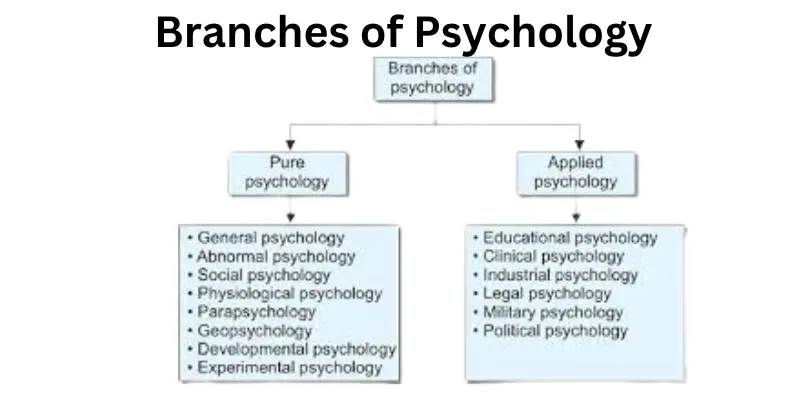
The Branches of Psychology cover a wide range of human behavior, mental functions, emotions, and thought processes. From understanding mental illnesses to improving workplace behavior, each branch provides valuable insights. This guide explored all major branches, their uses, applications, comparison points, and added FAQs to help readers understand the complete spectrum of modern psychological science.
Conclusion
Understanding the branches of psychology is essential for students, researchers, professionals, and anyone interested in human behavior. Each branch plays a vital role in improving mental health, optimizing learning, guiding legal decisions, supporting child development, and enhancing workplace performance. With rapid advancements in neuroscience, AI, and behavioral research, the future of psychology continues to evolve, making it one of the most impactful disciplines worldwide.
Please Write Your Comments