What is Child Development? Meaning, Stages, Milestones, Factors & Importance
Updated: 22/01/2026
115
Child development is one of the most researched topics in psychology, education, and early childhood studies. Parents, teachers, and professionals often want to know how children grow, learn, and develop mentally, physically, socially, and emotionally. These Child Development Stages play very important ,and an essential role in there lives.
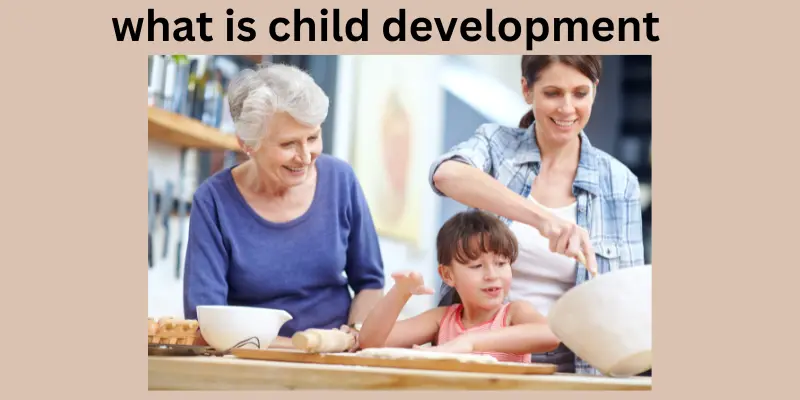
By recognizing the importance of early intervention, balanced learning, and healthy relationships, parents, caregivers, and educators can help children reach their fullest potential. Ultimately, understanding child development is not only about tracking progress—it’s about nurturing whole human beings who are capable, confident, and emotionally resilient.
What Is Child Development?
Child development refers to the process through which children grow and develop cognitive, physical, emotional, language, and social abilities from birth through adolescence. It explains how children think, behave, feel, learn, and interact with the world.
The development process does not occur overnight; it happens gradually and follows predictable patterns called developmental milestones. These milestones indicate what most children can do at a particular age.
Meaning & Definition of Child Development
In simple terms, child development means how a child changes over time—from crawling to walking, babbling to speaking, imitating to reasoning, and emotional reactions to social behaviors. Professionally, child development is defined as: “A sequence of physical, cognitive, linguistic, emotional, and social growth that occurs between birth and early adulthood.”
This definition combines psychology, education, biology, and social sciences.
Components of Child Development
Child development is multidimensional. Experts categorize it into five major components:
- Physical Development
- Cognitive Development
- Emotional & Social Development
- Language & Communication Development
- Moral & Personality Development
Each domain influences the other, creating a holistic growth process.
1. Physical Development
Physical development focuses on body growth, height, weight, motor skills, and brain maturation. It includes:
- Gross motor skills (walking, running, jumping)
- Fine motor skills (writing, drawing, buttoning)
- Sensory development (vision, hearing, smell, touch)
Healthy physical development depends on genetics, nutrition, health care, and activity levels.
2. Cognitive Development
Cognitive development involves learning, memory, attention, language, problem-solving, and intelligence. Children evolve from reflexive actions to reasoning and decision-making.
Jean Piaget’s cognitive theory explains how children move through thinking stages—from sensory experiences to abstract thinking. Today, brain research shows learning begins earlier than once believed, even before birth.
3. Emotional & Social Development
Emotional development deals with feelings, self-regulation, self-confidence, empathy, and personality. Social development refers to interactions with family, peers, teachers, and community.
Children learn social rules, cooperation, turn-taking, and communication through observation and play. Attachment theory states that early bonding with caregivers builds trust and long-term emotional stability.
4. Language & Communication Development
Language development is crucial for expressing needs, ideas, and emotions. It includes:
- Receptive language (understanding words)
- Expressive language (speaking words)
- Communication gestures (pointing, waving, eye contact)
Babies begin by cooing and babbling, then progress to words and sentences. Reading, talking, and singing significantly accelerate language milestones.
5. Moral & Personality Development
As children grow, they develop a sense of right and wrong, empathy, values, and moral judgments. Personality traits also emerge—such as temperament, curiosity, resilience, and sociability.
Theories by Erikson, Freud, and Kohlberg highlight how culture, family, and environment shape moral understanding.
Stages of Child Development
Experts commonly break child development into distinct stages:
- Prenatal Stage (Conception to Birth)
- Infancy (0–2 Years)
- Early Childhood (3–6 Years)
- Middle Childhood (7–12 Years)
- Adolescence (13–18 Years)
Each stage brings unique growth patterns and developmental milestones.
Child Development Milestones
Child Development Milestones by Age
| Age Range | Key Milestones |
|---|---|
| 0–12 Months | Rolls over, crawls, babbles, sits, stands, responds to name, shows stranger anxiety |
| 1–2 Years | Walks independently, uses simple words, imitates actions, explores environment |
| 2–3 Years | Runs, climbs, speaks short sentences, engages in pretend play, follows instructions |
| 3–6 Years | Jumps, draws shapes, speaks fluently, social play, recognizes letters/numbers |
| 7–12 Years | Reads/writes, logical thinking improves, peer group interactions, fine motor control |
| 13–18 Years | Puberty changes, abstract thinking, identity search, emotional independence |
This table gives caregivers a quick overview of what to expect at different ages.
Factors Affecting Child Development
Child development depends on multiple biological and environmental factors, including:
1. Genetics & Biological Factors
Inherited traits influence height, intelligence, temperament, early puberty, and certain abilities.
2. Nutrition
Healthy diet affects brain development, learning, immunity, and growth.
3. Family Environment
Positive caregiving, warmth, and communication enhance emotional stability.
4. Education & Early Learning
Early childhood education builds cognitive and language skills.
5. Socioeconomic Status
Income, healthcare access, books/toys, and parental education impact opportunity.
6. Culture & Society
Cultural expectations influence behavior, gender roles, and values.
7. Technology & Media
Excessive screen use can delay language skills and social interaction if uncontrolled.
8. Health & Medical Conditions
Prematurity, developmental disorders, and chronic illness affect milestones.
Role of Parents in Child Development
Parents shape emotional, moral, and social development more than any institution. Parenting styles—authoritative, permissive, or authoritarian—affect confidence, resilience, and discipline.
Daily interactions such as reading, playing, storytelling, and talking increase intelligence, vocabulary, and emotional bonding.
Role of Schools & Education
Schools teach core academics, but also promote social behaviors, teamwork, leadership, and problem-solving. Teachers act as secondary attachment figures providing structure and encouragement.
Signs of Delayed Development
Developmental delays may involve speech, learning, motor skills, or social communication. Red flags include:
- Not walking or talking on time
- Limited eye contact
- Difficulty interacting
- Learning struggles
- Behavioral rigidity
Early intervention improves outcomes significantly.
How to Support Child Development at Home
Experts recommend simple strategies:
Read daily
Ask open-ended questions
Play educational games
Encourage outdoor activities
Limit screens
Offer social experiences
Provide emotional support
Maintain routines
Small consistent actions build lifelong developmental advantages.
Importance of Child Development
Child development determines school readiness, emotional stability, intelligence, creativity, and future success. Strong early foundations predict better education, relationships, and career outcomes.
Countries that invest in early childhood programs see higher productivity and lower crime, proving its societal and economic value.
Child Development vs. Child Growth
Child development and child growth are closely related concepts, yet they are not the same. Many parents and educators mistakenly use them interchangeably, but understanding the difference helps with tracking progress, identifying delays, and supporting learning.
1. Meaning (Core Difference)
Child Growth
Growth refers to physical changes in the body, such as increases in height, weight, head size, and muscle structure.
It is measurable, biological, and mostly quantitative.
Child Development
Development refers to mental, emotional, social, language, and cognitive changes that influence how a child behaves, learns, thinks, communicates, and interacts.
It is mostly qualitative and holistic.
2. Nature of Progress
Growth
Linear
Predictable
Follows biological timelines
Measured using charts & percentiles
Development
Complex & multi-dimensional
Influenced by environment + learning
Progress varies across children
Measured through milestones, skills, & behavior
3. Examples
Growth Examples
- Gaining weight
- Growing taller
- Increase in head circumference
- Tooth eruption
- Puberty changes
Development Examples
- Learning to speak sentences
- Solving puzzles
- Managing emotions
- Making friends
- Reasoning & problem-solving
- Understanding rules
4. Major Domains Involved
Growth Domains
- Physical size
- Organs & tissues
- Bone length
- Muscle development
Development Domains
- Cognitive development
- Language & communication
- Emotional development
- Social behavior
- Moral & personality development
5. Measurement Tools
Growth
Measured in:
- Inches / centimeters
- Pounds / kilograms
- Percentile charts
- BMI
Development
Measured through:
- Observation
- Milestones
- Psychological testing
- Parent reports
- Teacher assessments
6. Influencing Factors
Growth Factors
- Genetics
- Nutrition
- Hormones
- Health & illness
- Sleep
Development Factors
- Family environment
- Education & stimulation
- Parenting style
- Social experiences
- Language exposure
- Culture
- Screen time
7. Timeline
Growth
Starts prenatally and continues till late adolescence or early adulthood.
Development
Also starts before birth but continues throughout life, especially in cognitive & emotional domains.
Short Comparison Table
| Aspect | Child Growth | Child Development |
|---|---|---|
| Definition | Physical increase in size | Changes in skills, behavior & abilities |
| Nature | Quantitative | Qualitative |
| Domains | Height, weight, organs | Cognitive, social, emotional, language |
| Measurement | Charts, scales, BMI | Milestones, tests, observation |
| Influence | Genetics, hormones, nutrition | Environment, family, education |
| Speed | Predictable & linear | Variable & complex |
| Examples | Taller, heavier | Talking, reasoning, learning |
| Focus | Body | Mind + behavior |
| Ends | Adulthood | Lifelong process |
Relationship Between Growth & Development
Growth and development influence each other.
Example: Improved nutrition (growth) strengthens brain development (cognition). Similarly, emotional security (development) encourages physical health (growth). Experts consider both essential for healthy childhood outcomes.
These two terms are often confused:
- Growth = physical changes (height, weight)
- Development = cognitive, emotional, language, and social progress
Growth is biological; development is holistic.
Modern Challenges in Child Development
Today’s parents face new developmental hurdles, including:
- Screen dependency
- Fast-paced lifestyles
- Reduced outdoor play
- Processed food diets
- Academic pressure
- Social media influence
Balanced parenting solves many of these challenges.
FAQs
1. What is child development in simple words?
Child development means how children grow and learn mentally, physically, socially, emotionally, and linguistically from birth to adolescence.
2. Why is child development important?
It prepares children for school, relationships, adulthood, learning, and emotional well-being. Strong early development predicts future success.
3. What are the main areas of child development?
Physical, cognitive, emotional, social, language, and moral development are the main areas.
4. What are child development milestones?
Milestones are skills most children learn at a specific age, such as walking, speaking, reading, or social interaction.
5. What affects child development the most?
Genes, nutrition, family environment, education, socioeconomic status, culture, and health play major roles.
6. What is the difference between growth and development?
Growth refers to body size changes, while development includes mental, emotional, and behavioral progress.
Summary on Child Development
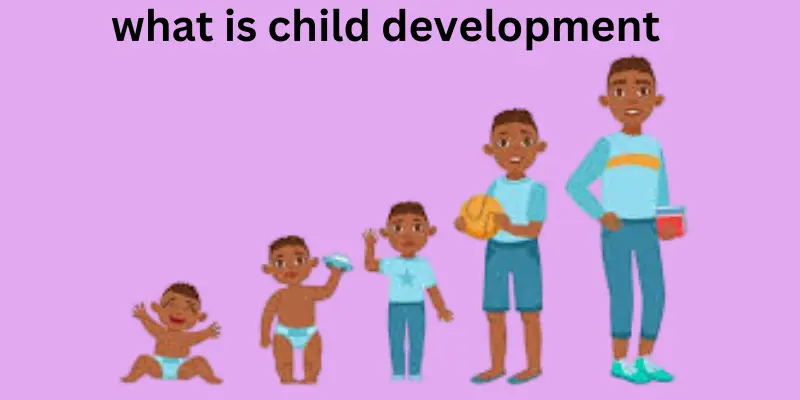
Child development is a continuous and multi-dimensional process that shapes how children grow physically, cognitively, emotionally, and socially from infancy into adulthood. While each child follows a unique path, the major developmental milestones serve as helpful markers for identifying strengths, challenges, and opportunities for support. Modern research emphasizes the role of early experiences, family environment, education, and socio-cultural influences in shaping long-term outcomes.
Conclusion
Child development is a continuous, multifaceted process that shapes who a child becomes physically, mentally, emotionally, morally, and socially. Understanding development helps caregivers support learning, detect delays early, and nurture confident, capable adults.
Development is not a competition; every child progresses at their own pace. The key is providing love, stimulation, education, nutrition, and safe environments.
Please Write Your Comments