Normative Influence: Definition, Meaning, Examples & Psychology
Updated: 27/10/2026
7
Normative influence, also called normative social influence, is the tendency to adjust behavior, opinions, or outward expressions to gain social acceptance or avoid rejection. It occurs when people feel motivated to follow a group’s expectations because they want to be liked, respected, or included.

In simple terms, normative influence happens when someone does something because they want to fit in with other people.
Imagine a student sitting with classmates who all support a particular opinion. The student privately disagrees but decides to express agreement because they do not want to be laughed at or excluded. The student’s response is influenced by the desire for acceptance rather than necessarily by a belief that the group is correct.
This process is closely connected to conformity, which means adjusting behavior or attitudes to align with a group. Normative influence is one reason people conform, although conformity can also occur because individuals believe others possess better information.
The SAGE Encyclopedia of Social Psychology explains normative influence in terms of people changing their behavior, thoughts, or values to be liked and accepted by others. The strength of this influence often depends on how important the group is to the individual and how much social approval matters in that situation.
Normative influence can occur in families, schools, workplaces, friendship groups, online communities, and wider society. It may affect clothing choices, language, social attitudes, classroom participation, and decisions about whether to follow group expectations.
For children and teenagers, it is particularly useful to understand this concept alongside social influence in psychology, which covers the broader ways people and social environments affect thoughts, feelings, and behavior.
What Is the Meaning of Normative Influence in Psychology?
In psychology, normative influence refers to the social pressure people experience when they believe that behaving differently from others could lead to disapproval, embarrassment, or exclusion. It is based primarily on the motivation to belong rather than the need to discover the correct answer.
Human beings depend on social relationships for companionship, cooperation, and support. As a result, being accepted by a group can feel important, while being rejected may create discomfort or anxiety. Normative influence helps explain why people sometimes prioritize these social concerns over their personal preferences.
For example, a child may enjoy drawing but stop participating because classmates describe drawing as uncool. A teenager may wear a particular style of clothing because most friends wear it. An adult may laugh at a joke they find offensive because everyone else in the room is laughing.
In each case, the individual responds to perceived social expectations. The person may genuinely adopt the group’s preference, or they may simply behave as though they agree.
Psychologists distinguish between public compliance and private acceptance. Public compliance occurs when someone outwardly follows a group’s expectations without necessarily agreeing internally. Private acceptance occurs when the person genuinely adopts the group’s belief or attitude.
Normative influence is commonly associated with public compliance, although the effects can vary. Repeated social experiences may eventually affect personal attitudes, especially when people come to identify strongly with the group or accept its values.
The key point is that normative influence concerns the motivation to gain acceptance or avoid social disapproval. It does not automatically mean that a person lacks intelligence, confidence, or independent thinking.
Why Does Normative Influence Occur?
Normative influence occurs for several interconnected psychological and social reasons. People differ in how strongly they respond to these pressures, but the following factors commonly help explain the behavior.
The Need for Social Acceptance
People generally want to feel included in the groups that matter to them. Friends, classmates, family members, colleagues, and communities can provide belonging and emotional support. When individuals believe that agreement will help them maintain these relationships, they may adjust their behavior to match group expectations.
For example, a new student may adopt the language and routines of classmates to make it easier to form friendships. This behavior can be a normal part of adjusting to a new social environment.
Fear of Rejection
Fear of exclusion can make people reluctant to express disagreement. Someone who believes that a group will reject different opinions may remain silent or publicly agree, even when their private view is different.
This pressure may be particularly noticeable among young people who are still developing their social identities and learning how to manage disagreements.
Desire for Approval
Approval can come through compliments, invitations, attention, acceptance, or positive reactions. When people receive approval for following group expectations, they may be more likely to repeat the behavior.
Online environments can make this process especially visible. Likes, comments, shares, and follower responses may signal which opinions or behaviors receive social approval.
However, not every popular post or trend creates normative influence. The key factor is whether a person adjusts their behavior to gain acceptance or avoid negative reactions.
Group Identity
People often feel connected to groups that reflect their interests, values, culture, or goals. The stronger this connection becomes, the more important group expectations may feel.
A student who strongly identifies with a sports team, friendship group, or school community may be particularly motivated to follow its shared expectations. This can encourage teamwork and cooperation, although it may also discourage disagreement when group pressure becomes excessive.
Fear of Embarrassment
People may avoid standing out because they do not want to appear foolish, unusual, or socially awkward. This concern can affect behavior even when nobody directly threatens or pressures them.
For instance, a student may know the correct answer to a question but remain quiet because classmates might laugh if the answer is wrong. The student’s decision is shaped by anticipated social judgment.
Unwritten Social Rules
Every group develops expectations about acceptable behavior. Some expectations are explicit, such as classroom rules, while others are informal, such as how group members dress, speak, or respond to disagreements.
These unwritten expectations are known as social norms. People may follow them automatically or consciously adjust their behavior to avoid disapproval.
Understanding these causes helps explain why normative influence can operate without direct commands or obvious pressure. Sometimes, the expectation of how others might react is enough to change behavior.
Examples of Normative Influence in Everyday Life
Normative influence occurs in ordinary situations, often without people realizing why they have changed their behavior. The following examples demonstrate how the desire for acceptance can shape decisions.
Example 1: Teenagers and Peer Pressure
A teenager’s friends begin making fun of students who wear inexpensive clothing. Although the teenager does not share this attitude, they start avoiding their usual clothes because they fear becoming the next target of criticism.
This is normative influence because the teenager changes their behavior to avoid rejection. The decision is driven by social acceptance rather than a genuine change in personal preference.
Example 2: Classroom Discussions
During a classroom discussion, most students support an answer that one student believes is incorrect. The student decides to agree with the majority rather than explain their own reasoning.
The student may be worried about appearing foolish or being criticized by classmates. If the student privately continues to believe the original answer, the behavior illustrates public compliance.
Example 3: Following Fashion Trends
A group of friends begins wearing a particular type of clothing. One member dislikes the style but purchases similar clothes because they want to fit in.
Following a trend is not always an example of normative influence. People may genuinely like popular styles. However, when someone adopts a style mainly to gain approval or avoid being treated differently, normative influence is a likely explanation.
Example 4: Social Media Behavior
A young person sees that certain opinions receive many likes and positive comments. Even though they hold a different view, they post a similar opinion because they want approval from their online community.
The person’s public expression is influenced by anticipated social rewards. This does not necessarily mean that their private belief has changed.
Example 5: Joining Group Activities
A child initially feels uncomfortable joining a school club. After noticing that several friends participate, the child decides to join because being part of the group seems appealing.
This example shows that normative influence can have positive outcomes. The child may develop friendships, learn new skills, and feel more connected to the school community.
Example 6: Laughing at an Inappropriate Joke

A group of students laughs at a joke that targets another student. One student feels uncomfortable but laughs along because they do not want the group to turn against them.
The student’s response illustrates how social pressure can encourage behavior that conflicts with personal values. It also shows why adults should help children practice ways to disagree respectfully.
Example 7: Workplace Conformity
An employee disagrees with a team’s preferred approach but supports it during a meeting because everyone else appears to agree. The employee fears that speaking up could damage professional relationships.
Normative influence is not limited to children or teenagers. Adults may also adjust their public responses to protect relationships, reputations, or their position within a group.
Example 8: Family Expectations
A young adult chooses a hobby because relatives strongly approve of it, even though the person would prefer a different activity. The decision may reflect a desire to maintain family approval.
Family influence can also be constructive. Shared expectations may encourage responsibility, cooperation, and helpful routines. The important distinction is whether a person feels able to express preferences and make reasonable independent choices.
Across these examples, the common element is the motivation to gain acceptance or avoid disapproval. The specific behavior may be harmless, beneficial, or harmful depending on the circumstances.
Normative Influence in Children and Teenagers
Normative influence is particularly relevant to child development because children gradually learn how social groups work, how relationships are maintained, and how other people may respond to their behavior.
Young children often follow familiar adults and classmates while learning everyday routines. They may copy how friends play, what games they choose, or how they communicate. Some of this behavior reflects observation and learning rather than normative influence specifically.
Normative influence becomes clearer when a child changes behavior because acceptance feels at stake. For example, a child may stop participating in a favorite activity after classmates criticize it or agree with a group to avoid exclusion.
During adolescence, friendships and social identity can become especially important. Teenagers may pay closer attention to peer approval, group membership, reputation, appearance, and social expectations. These concerns can make it difficult to express disagreement, even when a young person recognizes that a group decision is unwise.
Research on adolescent social development emphasizes that social influence is complex and can produce both positive and negative outcomes. The review Social Influence on Positive Youth Development: A Developmental Neuroscience Perspective discusses how peer and social environments may contribute to healthy development as well as risk-taking.
Positive normative influence can encourage children to study, help classmates, participate in sports, follow safety rules, or treat others respectfully. Negative normative influence can contribute to bullying, exclusion, unhealthy habits, or participation in risky activities.
Parents and teachers should therefore avoid assuming that all group influence is harmful. Instead, they can help children recognize when group expectations support well-being and when those expectations conflict with safety, fairness, or personal values.
A useful starting point is understanding the broader relationship between social psychology and child development, including how friendships, family relationships, classroom experiences, and social expectations influence children’s behavior.
Normative Influence and Conformity
Normative influence and conformity are closely related, but they are not identical concepts.
Normative influence describes one reason people adjust their behavior: they want to gain acceptance or avoid rejection. Conformity describes the adjustment of behavior, attitudes, or judgments to align with a group or its expectations.
For example, a student may agree with classmates because they fear being excluded. Normative influence explains the motivation, while conformity describes the resulting adjustment in the student’s public response.
However, not every act of conformity results from normative influence. Someone may follow a group because they genuinely believe its members have better information. In that case, informational social influence may be the more relevant explanation.
Conformity can also serve useful purposes. Following shared classroom routines, cooperating with teammates, and respecting reasonable community expectations can help groups function effectively.
The concern arises when conformity prevents people from expressing legitimate concerns, making independent judgments, or refusing unsafe behavior.
For more background, Simply Psychology’s guide to conformity and social influence explains how normative and informational processes can lead people to conform in different ways.
Normative Influence vs. Informational Social Influence
Normative influence and informational social influence are two important explanations for why people conform. Although both involve the influence of others, the motivation behind each is different.
Normative influence occurs when a person wants to be accepted, liked, or included. Informational social influence occurs when a person looks to others for guidance because they believe those people may know more or have more accurate information.
Consider a student who sees classmates giving the same answer to a difficult question. If the student agrees because they believe the classmates understand the material better, informational influence may be involved. If the student agrees despite believing the answer is wrong because they fear ridicule, normative influence is more likely.
The two processes can also occur together. A person may both trust the group’s judgment and want to maintain good relationships with its members.
The following comparison highlights their main differences.
| Feature | Normative Influence | Informational Social Influence |
|---|---|---|
| Main motivation | Gain acceptance or avoid rejection | Find the correct answer or understand a situation |
| Primary concern | Social approval | Accuracy and uncertainty |
| Typical situation | Fear of standing out or being excluded | Uncertainty about what to do or believe |
| Possible outcome | Public agreement without private acceptance | May lead to genuine acceptance of the group’s view |
| Example | Agreeing with friends to avoid criticism | Following an experienced person’s guidance in an unfamiliar situation |
These are useful distinctions rather than absolute rules. Real-life situations may involve both processes, and the outcome depends on the individual and the social context.
The Role of Solomon Asch’s Conformity Experiments
One of the best-known demonstrations of group pressure comes from psychologist Solomon Asch’s conformity experiments in the 1950s.
In these experiments, participants were asked to compare line lengths and identify which comparison line matched a standard line. The task was relatively straightforward, but participants sometimes heard other group members give the same incorrect answer before responding themselves.
The results showed that some participants gave answers that matched the incorrect majority, even when the correct answer appeared clear. This research helped demonstrate that people may conform to group pressure even when they have reason to disagree.
The findings are relevant to normative influence because concern about standing apart from a unanimous group can affect public responses. They also illustrate why social pressure can be powerful without direct threats or explicit demands.
Asch’s work should not be interpreted as proof that everyone conforms in the same way. Responses depend on factors such as the situation, the group, the individual, and whether people can answer privately. Nevertheless, the experiments remain an important part of the study of conformity and social influence.
The research overview on normative social influence provides additional background on Asch’s studies, group agreement, and the relationship between public compliance and private belief.
Positive Effects of Normative Influence
Normative influence is not inherently negative. Shared expectations can encourage behaviors that benefit individuals and communities.
Encouraging Cooperation: People may follow group expectations that promote teamwork, sharing, and mutual support. In a classroom, students may help one another because cooperation is valued by their peers.
Supporting Social Belonging: Adopting reasonable group customs can help newcomers feel included. Learning how a club operates or participating in shared activities can make it easier to build relationships.
Promoting Healthy Habits: Children may be encouraged to read, exercise, participate in school activities, or follow safety routines when these behaviors are valued within their friendship groups.
Strengthening Community Standards: Shared expectations about honesty, respect, and fairness can encourage people to consider how their actions affect others.
Improving Social Adjustment: Understanding and following appropriate social expectations can help children navigate unfamiliar situations. They can learn when to take turns, listen to others, and cooperate toward common goals.
However, positive outcomes depend on the nature of the group norms. Social approval should not require children to abandon their safety, dignity, or legitimate individual preferences.
Negative Effects of Normative Influence
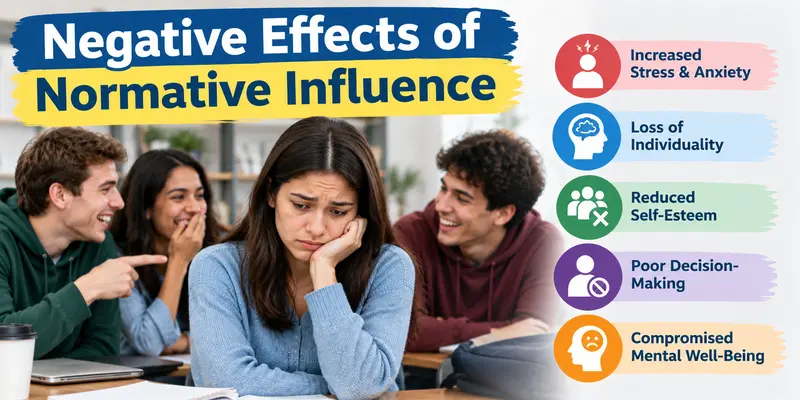
Normative influence can become harmful when people feel compelled to follow expectations that conflict with their values, well-being, or safety.
Unhealthy Peer Pressure: A child or teenager may participate in risky behavior because friends suggest that refusing will make them seem weak or uncool.
Suppression of Independent Thinking: People may avoid questioning a group’s decisions because disagreement feels socially dangerous. This can prevent useful discussion and correction of mistakes.
Bullying and Exclusion: Group members may join in teasing or excluding someone because they fear becoming targets themselves. The desire to remain accepted can unintentionally reinforce harmful group behavior.
Loss of Confidence: Repeatedly hiding personal preferences or opinions may make it harder for some individuals to express themselves confidently. This does not happen to everyone, but it can become a concern when social approval consistently overrides independent judgment.
Unwise Decision-Making: People may support decisions they privately consider inappropriate because they do not want to challenge the majority.
Emotional Stress: Worrying about rejection or criticism can create distress, particularly when a person feels that acceptance depends on constant conformity.
Recognizing these risks can help parents and educators support children without treating ordinary social belonging as a problem. The aim is to encourage healthy relationships while protecting the ability to think independently.
How Can Normative Influence Be Reduced?
Normative influence cannot and does not need to be eliminated. People naturally respond to social expectations, and shared norms are part of everyday life. However, children and adults can learn to recognize unhealthy pressure and respond more thoughtfully.
Build Confidence in Personal Decisions
Children benefit from opportunities to express preferences, explain their reasoning, and make age-appropriate choices. Adults can listen respectfully even when they disagree with a child’s decision.
Teach Assertive Communication
Assertiveness means expressing thoughts, preferences, and boundaries respectfully. Children can practice phrases such as “I don’t agree,” “I don’t want to do that,” or “Let’s try something else.”
Role-playing common peer situations can help children rehearse these responses before facing pressure in real life.
Encourage Critical Thinking
Ask children to consider why a group supports a particular behavior. Questions such as “Is this safe?” “Does it hurt anyone?” and “Would you choose this if your friends were not involved?” can help them separate personal judgment from the desire for approval.
Promote Supportive Friendships
Healthy friendships allow room for differences of opinion. Encourage children to build relationships with people who respect boundaries, accept disagreement, and do not demand harmful behavior as a condition of belonging.
Make It Safe to Disagree
Parents and teachers can model respectful disagreement. When children see adults discuss different opinions without insults or rejection, they learn that disagreement does not have to destroy a relationship.
Challenge Harmful Group Norms
Teachers and caregivers should respond appropriately to bullying, humiliation, exclusion, and unsafe group behavior. Clear expectations can help make respectful conduct socially acceptable within a group.
Strengthen Independent Decision-Making
Children can be encouraged to pause before following a group. They can consider the consequences, identify their own values, and seek advice from a trusted adult when a situation feels unsafe.
These approaches do not require children to ignore everyone else. Rather, they help young people balance the natural desire for belonging with independent judgment and personal responsibility.
How Parents and Teachers Can Help Children
Parents and teachers play an important role in helping children understand social pressure. Their responses can influence whether children feel safe discussing difficult experiences or hide them out of embarrassment.
Start by listening without immediately criticizing the child’s friends. If a child explains that classmates are pressuring them, ask what happened, how the child felt, and what they believe might happen if they refuse. This helps identify the source of the pressure.
Next, distinguish between harmless preferences and harmful expectations. Following a fashion trend or joining a popular game is not necessarily a concern. Pressure to bully someone, break safety rules, or participate in dangerous behavior deserves a different response.
Adults can also provide practical alternatives. Help children prepare a response, identify a supportive friend, leave an uncomfortable situation, or approach a trusted adult. When necessary, work with school staff to address persistent peer pressure or bullying.
Finally, reinforce the idea that acceptance should not depend on doing everything a group demands. Children can value friendships and cooperate with others while maintaining their own boundaries.
These skills connect with broader social-emotional learning, which supports self-awareness, self-management, social awareness, relationship skills, and responsible decision-making. The CASEL framework provides further information about these competencies.
Normative Influence in Social Media and Online Communities
Normative influence also occurs in digital environments. Social media platforms make group reactions visible through likes, comments, shares, follower counts, and trending content. These signals can shape what users believe is popular or socially acceptable.
For example, a teenager may post a particular type of photograph because friends receive positive reactions for similar content. Another person may avoid expressing an opinion because they expect criticism from an online community.
Online conformity is not always harmful. Digital communities can encourage learning, creativity, charitable activity, and supportive relationships. The problem arises when users feel that approval depends on presenting a false image, spreading harmful content, or participating in behavior that makes them uncomfortable.
Parents can help children develop healthier online habits by discussing privacy, respectful communication, digital boundaries, and the difference between popularity and quality. They can also remind children that a large number of likes does not prove that an opinion is correct or that a trend is worth following.
Young people should understand that online approval is only one form of feedback. It does not define their personal worth, and they are allowed to disagree with popular opinions.
Frequently Asked Questions About Normative Influence
What is normative influence in simple words?
Normative influence is when someone changes their behavior or public opinion to fit in with others, gain approval, or avoid rejection. For example, a student may agree with classmates despite privately disagreeing because they fear being laughed at.
What is an example of normative influence?
A teenager starts wearing a particular style of clothing because all their friends wear it and they worry about being excluded if they dress differently. If the main motivation is social acceptance, this is an example of normative influence.
What is the difference between normative influence and conformity?
Normative influence is a motivation for changing behavior to gain acceptance or avoid disapproval. Conformity is the adjustment of behavior or attitudes to match a group. Normative influence can lead to conformity, but conformity can also result from other motivations.
What is the difference between normative and informational social influence?
Normative influence occurs when people want to be accepted by a group. Informational social influence occurs when people follow others because they believe those people have more accurate information or understand an uncertain situation better.
Can normative influence be positive?
Yes. Normative influence can encourage cooperation, kindness, participation, healthy routines, and respect for reasonable social expectations. Its effects depend on the norms being followed and the consequences of the behavior.
How does normative influence affect children?
It can affect children’s clothing choices, classroom participation, friendships, opinions, and responses to peer pressure. It may encourage positive social behavior but can also contribute to unhealthy conformity when children fear rejection.
Why is normative influence important in psychology?
Normative influence helps psychologists understand why people sometimes follow group expectations despite privately disagreeing. It offers insight into conformity, peer pressure, social approval, group dynamics, and decision-making.
How can someone resist negative normative influence?

People can practice assertive communication, evaluate the consequences of their choices, build supportive friendships, and seek guidance from trusted adults. Learning to disagree respectfully can help people maintain relationships without following harmful expectations.
Conclusion
Normative influence explains why people sometimes change their behavior to gain acceptance, maintain relationships, or avoid social rejection. It is a key concept in social psychology because group expectations can shape everyday choices, public opinions, and interpersonal behavior.
For children and teenagers, normative influence can be especially important as friendships, peer approval, and social identity develop. It may encourage positive behaviors such as cooperation and kindness, but it can also contribute to bullying, unhealthy peer pressure, and decisions that conflict with personal values.
Understanding normative influence helps parents, teachers, and young people recognize the difference between healthy social adjustment and harmful pressure. By encouraging critical thinking, assertive communication, supportive friendships, and responsible decision-making, adults can help children belong to groups without losing their ability to think independently.
Ultimately, healthy social relationships do not require people to agree with everything others say or do. People can respect group expectations, value friendships, and cooperate with others while maintaining their own beliefs, boundaries, and sense of responsibility.
Please Write Your Comments