4 Parenting Styles: A Complete Guide for Modern Parents
Updated: 31/12/2025
157
Introduction
Parenting is one of the most influential responsibilities a person can undertake. Every decision, rule, response, and emotional interaction shapes a child’s behavior, confidence, mental health, and future relationships. Psychologists and child development experts have identified 4 parenting styles that explain how parents typically interact with their children. These styles influence discipline methods, emotional bonding, communication, and long-term outcomes.
Understanding the 4 parenting styles helps parents recognize their own approach, avoid harmful patterns, and adopt healthier strategies that support a child’s emotional, social, and cognitive growth. This guide follows EEAT (Experience, Expertise, Authoritativeness, and Trustworthiness) principles and is based on established psychological research, including the work of developmental psychologist Diana Baumrind.
In this in-depth article, we will explore the four types of parenting styles, their characteristics, real-life examples, advantages, disadvantages, and their effects on child development—while also addressing modern parenting challenges.
Why Understanding the 4 Parenting Styles Matters
Understanding the 4 parenting styles is essential because parenting directly impacts:
- Emotional regulation
- Social skills
- Academic success
- Mental health
- Self-discipline
- Future relationships
Research consistently shows that parenting style plays a critical role in how children cope with stress, authority, and independence later in life.
What Are the 4 Parenting Styles?
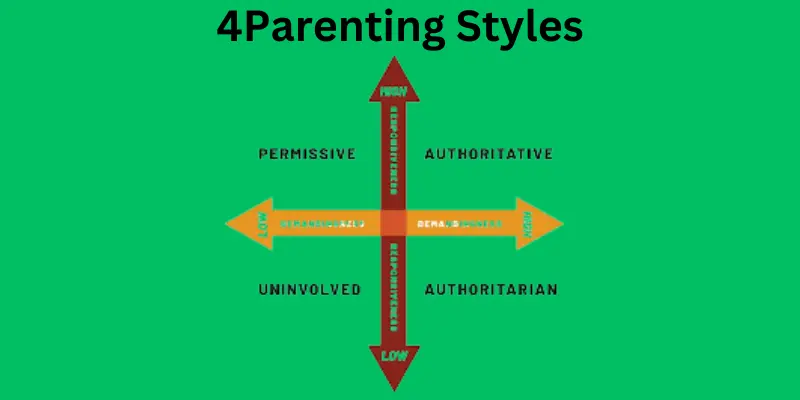
The 4 parenting styles refer to four distinct approaches parents use to raise their children, categorized based on two key factors:
- Responsiveness (warmth and emotional support)
- Demandingness (rules, discipline, and expectations)
By combining these factors, psychologists identified the following four parenting styles:
- Authoritative Parenting
- Authoritarian Parenting
- Permissive Parenting
- Uninvolved (Neglectful) Parenting
Each style affects children differently, shaping their behavior, self-esteem, academic performance, emotional intelligence, and adult relationships.
1. Authoritative Parenting Style (Balanced & Healthy)
Authoritative parenting is widely considered the most effective and healthy among the 4 parenting styles. It balances high expectations with emotional warmth, guidance, and open communication.
Authoritative parents set clear rules but explain the reasons behind them. They listen to their children, respect their feelings, and encourage independence while maintaining consistent boundaries.
Key Characteristics of Authoritative Parenting
- High warmth and responsiveness
- Clear rules and consistent discipline
- Open communication
- Encouragement of independence
- Mutual respect between parent and child
Examples of Authoritative Parenting
- Explaining consequences instead of using fear
- Encouraging children to express opinions respectfully
- Offering guidance rather than control
- Using positive reinforcement
Pros of Authoritative Parenting
- High self-esteem in children
- Better academic performance
- Strong emotional regulation
- Healthy social relationships
- Strong problem-solving skills
Cons of Authoritative Parenting
- Requires time and patience
- Can be emotionally demanding for parents
- Difficult to maintain consistency under stress
Effects on Child Development
Children raised with authoritative parenting often grow into confident, responsible, emotionally intelligent adults. Research shows they are less likely to engage in risky behavior and more likely to develop leadership skills.
2. Authoritarian Parenting Style (Strict & Rule-Based)
Authoritarian parenting is a strict, control-oriented approach among the 4 parenting styles. Parents enforce rigid rules, expect obedience, and often discourage open discussion or emotional expression.
This style focuses on discipline rather than connection.
Key Characteristics of Authoritarian Parenting
- High demands, low responsiveness
- Strict rules with little explanation
- Emphasis on obedience
- Limited emotional warmth
- Punishment-based discipline
Examples of Authoritarian Parenting
- “Because I said so” responses
- Zero tolerance for questioning rules
- Harsh punishments for mistakes
- Limited praise or encouragement
Pros of Authoritarian Parenting
- Structured environment
- Clear expectations
- Short-term obedience
Cons of Authoritarian Parenting
- Low self-esteem in children
- Fear-based compliance
- Poor communication skills
- Higher anxiety and stress levels
Effects on Child Development
Children raised under authoritarian parenting may struggle with confidence, decision-making, and emotional expression. As adults, they may become either overly submissive or rebellious.
3. Permissive Parenting Style (Lenient & Indulgent)
Permissive parenting is a nurturing but rule-light approach within the 4 parenting styles. Parents are emotionally warm but set few boundaries or expectations.
They often act more like friends than authority figures.
Key Characteristics of Permissive Parenting
- High warmth, low discipline
- Few rules or consequences
- Avoidance of conflict
- Child-led decision-making
- Overindulgence
Examples of Permissive Parenting
- Allowing unlimited screen time
- Ignoring misbehavior to avoid conflict
- Rarely enforcing consequences
- Giving in to tantrums
Pros of Permissive Parenting
- Strong emotional bond
- High self-expression
- Low fear of punishment
Cons of Permissive Parenting
- Poor self-discipline
- Difficulty following rules
- Behavioral issues
- Entitlement problems
Effects on Child Development
Children raised with permissive parenting may struggle with authority, impulse control, and responsibility. They often face academic and behavioral challenges later in life.
4. Uninvolved Parenting Style (Neglectful)
Uninvolved parenting, also called neglectful parenting, is the most harmful among the 4 parenting styles. Parents provide basic needs but are emotionally detached and minimally involved.
Key Characteristics of Uninvolved Parenting
- Low warmth and low discipline
- Minimal communication
- Little guidance or supervision
- Emotional neglect
- Lack of involvement in daily life
Examples of Uninvolved Parenting
- Ignoring emotional needs
- Lack of rules or attention
- Absence during key developmental stages
- Minimal engagement in education
Pros of Uninvolved Parenting
- Early independence (often forced)
Cons of Uninvolved Parenting
- Emotional insecurity
- Poor academic outcomes
- Behavioral problems
- Higher risk of substance abuse
Effects on Child Development
Children raised by uninvolved parents often struggle with attachment, trust, self-worth, and mental health. This style is linked to long-term emotional and social difficulties.
Comparison Table: The 4 Parenting Styles
| Parenting Style | Warmth | Discipline | Communication | Child Outcomes |
|---|---|---|---|---|
| Authoritative | High | High | Open | Confident, responsible |
| Authoritarian | Low | High | One-way | Obedient, anxious |
| Permissive | High | Low | Child-led | Impulsive, undisciplined |
| Uninvolved | Low | Low | Minimal | Detached, insecure |
Which of the 4 Parenting Styles Is Best?
Experts widely agree that authoritative parenting is the most effective among the 4 parenting styles. It promotes emotional security, independence, and resilience while maintaining structure and guidance.
However, modern parenting is dynamic. Many parents naturally use a blend of parenting styles depending on the situation, child’s age, and cultural context.
Can Parenting Styles Change Over Time?
Yes. Parenting styles are not fixed. Parents can adapt and improve by:
- Practicing emotional awareness
- Learning positive discipline techniques
- Improving communication skills
- Seeking parenting education or counseling
Shifting toward an authoritative approach often leads to better outcomes for both parents and children.
Modern Challenges Affecting the 4 Parenting Styles
- Digital screen exposure
- Social media influence
- Mental health awareness
- Dual-income households
- Cultural expectations
These factors require flexibility while maintaining core parenting principles.
Expert Tips to Apply Healthy Parenting Practices
- Set clear but flexible boundaries
- Listen actively to your child
- Use discipline as teaching, not punishment
- Model respectful behavior
- Support emotional expression
FAQs About the 4 Parenting Styles
1. What are the 4 parenting styles?
The four parenting styles are authoritative, authoritarian, permissive, and uninvolved, based on levels of warmth and discipline.
2. Which parenting style is most effective?
Authoritative parenting is considered the most effective for balanced emotional and behavioral development.
3. Is strict parenting harmful?
Excessively strict (authoritarian) parenting can lead to anxiety, low self-esteem, and poor emotional regulation.
4. Can parents use more than one parenting style?
Yes, many parents naturally combine styles depending on situations and child needs.
5. Do parenting styles affect adulthood?
Yes, parenting styles strongly influence adult behavior, relationships, confidence, and mental health.
6. Can parenting styles change with time?
Absolutely. Parenting styles evolve with awareness, experience, and education.
Summary
The 4 parenting styles provide a powerful framework for understanding how parental behavior shapes a child’s future. Among them, authoritative parenting stands out as the most balanced and beneficial approach. However, effective parenting is not about perfection—it’s about awareness, growth, and consistent effort.
By understanding the strengths and weaknesses of each style, parents can make informed choices that nurture emotionally healthy, confident, and responsible children in today’s complex world.
Conclusion
The **4 parenting styles—authoritative, authoritarian, permissive, and uninvolved—**highlight how different approaches to discipline, communication, and emotional support shape a child’s development. Each style carries distinct strengths and challenges, influencing a child’s behavior, confidence, mental health, and future relationships.
Among them, authoritative parenting is widely recognized as the most balanced and effective, as it combines clear boundaries with warmth, respect, and open communication. However, successful parenting is not about strictly following one style but adapting thoughtfully to a child’s needs, age, and environment. By understanding the impact of the 4 parenting styles, parents can make informed choices, foster healthy emotional growth, and raise confident, responsible, and resilient children.
Please Write Your Comments