Emotional Development: Stages, Milestones, Skills & Parental Support
Updated: 13/02/2026
166
Emotional development refers to the process of understanding, expressing, and managing emotions from infancy through adulthood. It includes emotional awareness, empathy, self-regulation, and social interaction skills. Emotional development shapes personality, identity, and interpersonal relationships. Psychologists consider emotional skills essential for mental health, learning, social competence, and overall well-being.
See TOC for further choices
What is Emotional Development?
Emotional development refers to the ability to recognize, understand, express, and manage emotions throughout the lifespan. It includes emotional awareness, emotional regulation, empathy, social competence, coping skills, and resilience. Emotional development begins in infancy, continues through childhood, and shapes personality, mental health, interpersonal relationships, communication style, and self-confidence in adolescence and adulthood.
Researchers in developmental psychology highlight that emotional development is influenced by biological factors, genetics, temperament, parenting, attachment, environment, learning, and social interactions. In modern child psychology, emotional development is considered an essential pillar of overall child development, along with cognitive development, social development, and physical growth.
Importance of Emotional Development
Emotional development plays a powerful role in shaping how individuals interact with others, navigate stress, solve problems, and adapt to changing life situations. Children who develop healthy emotional skills show stronger self-esteem, improved behavior, better communication, and stronger learning outcomes. Schools and psychologists emphasize emotional learning because emotional well-being directly supports academic success.
Adults also benefit from strong emotional competencies. Emotional intelligence (EI) and emotional regulation skills influence workplace performance, relationships, parenting, decision-making, leadership, conflict resolution, and mental health. Conversely, poor emotional regulation can lead to anxiety, stress, mood disorders, aggression, and interpersonal difficulties.
Key Components of Emotional Development
Emotional development includes several interconnected components:
Stages of Emotional Development
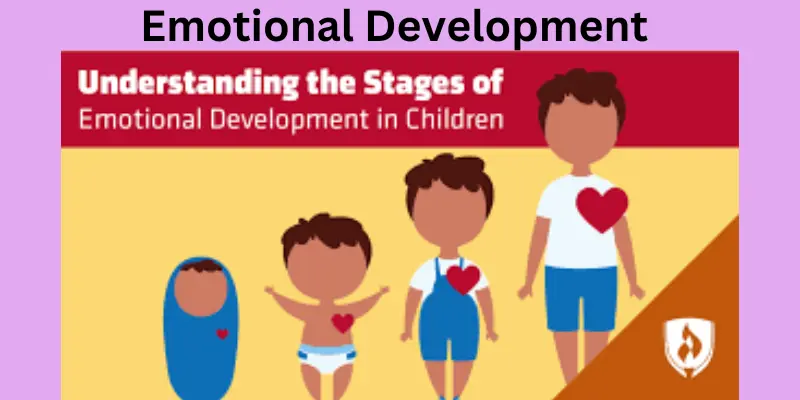
Emotional development progresses across predictable stages, although children may vary due to temperament, environment, and cultural influences.
Infancy (0–2 years)
Infants experience basic emotions such as joy, anger, fear, and discomfort. By the first year, babies develop secure attachments, show separation anxiety, and respond to caregivers’ emotions. Emotional bonding lays the foundation for trust, empathy, and healthy relationship patterns.
Early Childhood (2–6 years)
Children begin expressing emotions verbally and develop greater emotional awareness. Skills like empathy, sharing, and cooperative play emerge. Emotional regulation improves gradually as children learn self-control and understand rules, consequences, and social expectations.
Middle Childhood (6–12 years)
Children refine emotional cognition, conflict resolution, and problem-solving. Peer relationships become influential. Self-concept strengthens, and children start comparing themselves socially, influencing self-esteem. They also begin masking emotions in social settings.
Adolescence (12–18 years)
Adolescents experience heightened emotional complexity due to hormonal, cognitive, and social changes. Identity formation, emotional independence, and social belonging become central. Emotional regulation challenges may emerge as teens navigate peer dynamics, self-image, and autonomy.
Adulthood
Emotional maturity increases, enabling improved coping skills, emotional intelligence, resilience, and relationship management. Adults integrate emotional experiences into decision-making, leadership, and parenting.
Effects of Emotional Development
Emotional development affects how individuals handle stress, form attachments, solve problems, and communicate with others. Children with strong emotional skills demonstrate higher self-esteem, better academic outcomes, and healthier social relationships. Emotional maturity in adults contributes to resilience, empathy, leadership, conflict resolution, and mental wellness. Delays or challenges in emotional development can lead to anxiety, aggression, mood issues, and social difficulties.
Benefits of Emotional Development
Healthy emotional development offers numerous benefits, including improved self-confidence, empathy, social competence, and academic performance. Emotional skills support effective communication, conflict resolution, and problem-solving. Strong emotional regulation helps individuals cope with stress, build resilience, and maintain mental well-being. Over time, emotional maturity enhances personal relationships, leadership abilities, decision-making, and life satisfaction.
Milestones in Emotional Development
Milestones provide a useful framework for tracking emotional growth:
- Recognizing facial expressions
- Expressing feelings verbally
- Developing self-awareness
- Understanding social norms
- Identifying personal preferences
- Empathizing with others
- Managing frustration and anger
- Building friendships
- Showing compassion and remorse
- Handling stress and disappointment
Factors Influencing Emotional Development
Several factors shape how emotional skills develop:
- Biological & Temperamental Factors
- Parenting Style & Attachment Patterns
- Family Environment & Siblings
- Culture & Social Expectations
- Education & School Environment
- Peer Interactions & Social Groups
- Media & Digital Exposure
- Mental Health & Personality Traits
Role of Parenting & Attachment in Emotional Development
Parent-child relationships play a crucial role in emotional learning. Secure attachment builds confidence, emotional safety, and trust. Parenting styles—including authoritative, permissive, authoritarian, and uninvolved—impact emotional expression, empathy, and self-regulation.
Children raised with supportive, responsive, and empathetic parenting demonstrate stronger emotional resilience and communication skills. In contrast, neglectful or overly harsh environments can hinder emotional confidence or create anxiety.
Emotional Regulation & Self-Control
Emotional regulation refers to managing emotional reactions, especially during stress, frustration, or conflict. Self-control enables children and adults to pause, think, and choose appropriate responses. Emotional regulation develops gradually and is strongly influenced by guidance, modeling, and environment.
Social Emotional Learning (SEL)
SEL programs in schools support emotional development by teaching:
- Self-awareness
- Relationship skills
- Empathy
- Responsible decision-making
- Emotional literacy
Research shows SEL reduces behavioral problems, increases academic performance, and improves well-being.
Emotional Intelligence & Life Outcomes
Emotional Intelligence (EI) plays a major role in professional success, leadership, and social competence. Individuals with high EI exhibit stronger communication, adaptability, teamwork, and conflict resolution skills. EI contributes to healthier relationships, mental well-being, and resilience to stress.
Impact of Emotional Development on Mental Health
Healthy emotional skills reduce risks of anxiety, depression, aggression, and mood dysregulation. Emotional awareness and cognitive coping strategies protect mental well-being and support healthy identity formation throughout life.
How Culture Shapes Emotional Development
Cultures differ in how emotions are expressed, interpreted, and regulated. For instance, some cultures encourage emotional restraint while others encourage open expression. Cultural values influence empathy, communication, social norms, parenting, and emotional expectations.
Challenges & Delays in Emotional Development
Some children struggle with emotional milestones due to:
- Trauma and stress
- Developmental disorders
- Autism spectrum disorder
- ADHD
- Anxiety or mood issues
- Sensory processing disorders
- Social isolation
- Inconsistent parenting
Early intervention supports emotional and social competence.
Emotional Development in Digital Age
Digital media shapes emotional development through virtual communication, social comparison, and online relationships. Both benefits and risks exist—online platforms can build connection and literacy but may increase anxiety, bullying, or self-esteem issues.
FAQs
1. What is emotional development?
Emotional development is the process of learning to understand, express, and regulate emotions.
2. Why is emotional development important?
It improves relationships, communication, academic success, mental health, and social competence.
3. What are emotional development milestones?
Milestones include emotional recognition, empathy, self-awareness, social skills, and regulation.
4. What factors influence emotional development?
Genetics, temperament, parenting, environment, culture, and education contribute.
5. How can parents support emotional development?
Through empathy, communication, modeling behavior, guidance, emotional safety, and secure attachment.
6. What is emotional regulation?
It involves managing emotional reactions and practicing self-control during stress.
Summary on Emotional Development
Emotional development is a lifelong process involving emotional awareness, expression, regulation, and social understanding. It begins in infancy and evolves through childhood and adolescence as individuals learn to manage feelings and connect with others. Parenting, environment, culture, and education play major roles in emotional growth. Healthy emotional development supports mental health, communication, empathy, and positive social relationships across the lifespan.
Conclusion
Emotional development is essential for healthy behavior, communication, identity, and mental well-being across the lifespan. By supporting emotional skills early—through family, education, social environments, and emotional learning—individuals build resilience, empathy, and strong interpersonal relationships. Understanding
Please Write Your Comments