Psychology Meaning: Definition, Scope, and Real-World Applications
Updated: 13/01/2026
62
Introduction
Psychology meaning refers to the scientific study of the mind and human behavior, covering how people think, feel, learn, act, and interact. It explores mental functions, personality traits, cognition, perception, emotions, relationships, disorders, and decision-making processes. The field blends biology, neuroscience, social sciences, and philosophy to understand the human experience. Over time, psychology evolved from philosophical debates about the soul and consciousness into a modern scientific discipline grounded in data, research, and clinical evidence.
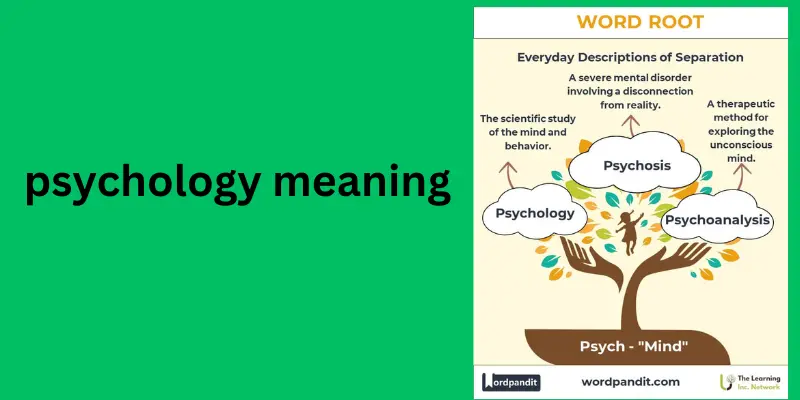
Psychology aims to answer important questions: Why do humans behave the way they do? How does the brain influence behavior? Why do emotions matter? How do experiences shape thinking and personality? These questions help researchers create theories and experiments that explain cognition, wellbeing, learning, memory, and motivation. Because behavior affects nearly every life domain, psychology supports industries such as healthcare, education, marketing, business, criminal justice, and human development.
What is the Meaning of Psychology in Simple Words?
In simple language, psychology meaning refers to the understanding of how the mind works and why people behave differently in similar situations. Every behavior has a reason — from choosing a career, forming friendships, dealing with stress, and managing conflict to falling in love, fearing failure, or seeking pleasure. Psychology allows us to decode these processes while linking them to brain chemistry, genetics, social factors, and environmental influences.
Modern psychology uses empirical research, statistical analysis, experiments, psychotherapy, tests, and brain imaging tools like fMRI or EEG to observe patterns. This separates the discipline from myths, opinions, and stereotypes about the mind. The scientific foundation ensures reliability and makes psychology valuable for diagnosing mental health disorders such as anxiety, depression, phobias, OCD, ADHD, PTSD, and bipolar disorder.
Origin of the Word Psychology
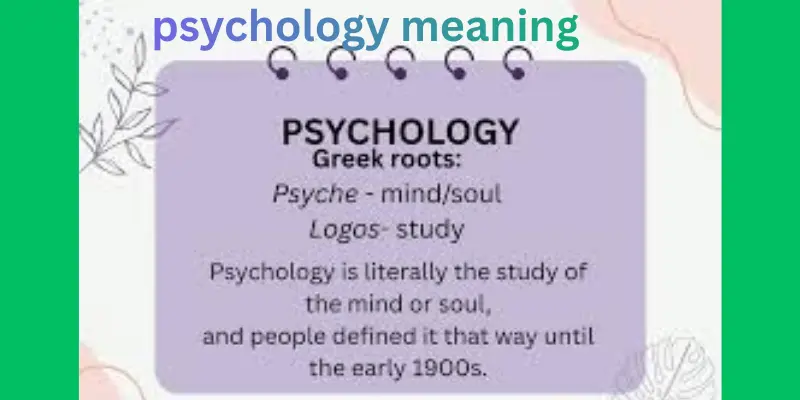
The word psychology originates from the Greek terms psyche (meaning soul, spirit, or mind) and logos (meaning study or knowledge). Historically, psychology was linked to philosophical debates about consciousness, morality, behavior, and free will. Philosophers such as Aristotle, Plato, Descartes, and Locke influenced early psychological thought, while later researchers like Wundt, Freud, Watson, and Skinner transformed psychology into a scientific field.
Wilhelm Wundt opened the first psychology laboratory in 1879, marking the formal birth of experimental psychology. Freud emphasized the unconscious mind and human motivation, while behaviorists highlighted observable learning patterns. Later, the cognitive revolution shifted psychology toward brain functioning, memory, perception, and information processing. Today, neuroscience, cognitive science, and positive psychology dominate research trends.
Scientific Meaning of Psychology
Scientifically, psychology meaning refers to the systematic study of behavior and mental processes using controlled experimentation, evidence, and critical observation. Psychology integrates three scientific pillars:
- Biological Factors — genes, hormones, neurotransmitters, brain structures
- Cognitive Factors — learning, memory, attention, perceptions, decision-making
- Environmental Factors — family, culture, education, peers, trauma, society
The scientific approach eliminates guesswork and reveals reliable behavior patterns. For example, reinforcement can change habits, trauma rewires neural circuits, and motivation drives productivity. These principles explain learning disorders, addictions, anxiety patterns, and personality development.
Branches & Types of Psychology
Understanding the types of psychology requires exploring its specialized branches, each studying different aspects of mind and behavior:
● Clinical Psychology — assessment and treatment of mental disorders
● Cognitive Psychology — memory, thinking, perception, language, intelligence
● Developmental Psychology — human growth from childhood to aging
● Social Psychology — group behavior, persuasion, relationships, prejudice
● Behavioral Psychology — conditioning, habits, reinforcement, learning
● Neuropsychology — brain structures and disorders affecting cognition
● Industrial-Organizational (I-O) Psychology — workplace behavior and performance
● Health Psychology — stress, wellbeing, disease prevention, lifestyle change
● Personality Psychology — traits, identity, temperament, individuality
● Educational Psychology — learning, teaching styles, assessments
● Forensic Psychology — criminal justice, profiling, court evaluation
● Sports Psychology — performance, motivation, mental resilience
Each branch applies psychological theory to real-world environments, making psychology one of the most interdisciplinary sciences.
Psychology in Everyday Life
Most people assume psychology is only about mental disorders or therapy. However, psychology influences daily life far beyond clinical settings. Communication skills, emotional intelligence, parenting, decision-making, leadership, memory, persuasion, and stress management are rooted in psychological principles.
Examples include:
marketers using cognitive biases to increase sales
teachers using learning psychology to improve student outcomes
leaders applying motivation theories to drive performance
mental health experts using CBT to restructure negative thinking
researchers analyzing social influence on political behavior
Even simple habits such as procrastination, addictions, eating behavior, and spending patterns are connected to psychological mechanisms like reward systems and dopamine responses.
How Psychology Works (Mechanisms & Processes)
Psychology works through multiple mechanisms that explain how humans process information, respond to stimuli, and adapt to environments. Major psychological processes include:
● Cognition — understanding, reasoning, problem solving
● Memory — encoding, storage, retrieval
● Emotion — fear, anger, happiness, motivation
● Learning — reinforcement, observation, conditioning
● Motivation — intrinsic vs. extrinsic drivers
● Perception — interpretation of sensory data
● Personality — enduring traits shaping responses
These interconnected processes shape behaviors ranging from communication and academic learning to conflict resolution, career decisions, and mental resilience.
Psychology and Mental Health
Mental health has become a major global concern due to stress, social pressure, digital overload, trauma, and lifestyle factors. Psychology contributes to prevention, diagnosis, treatment, and rehabilitation of mental disorders through cognitive and behavioral therapies, counseling, medication management, and psychoeducation.
Evidence-based therapies include:
● CBT (Cognitive Behavioral Therapy)
● DBT (Dialectical Behavioral Therapy)
● Psychoanalysis
● Humanistic Therapy
● Exposure Therapy
● Family & Couples Counseling
Therapists help patients challenge negative thinking, build coping skills, and regain emotional stability. The preventive side of psychology promotes stress management, emotional regulation, mindfulness, and self-awareness.
Psychology vs. Psychiatry (Comparison)
Psychology primarily focuses on behavior and mental processes using therapy and assessments. Psychiatry, on the other hand, is a medical specialty dealing with mental disorders through diagnosis and medication. Psychiatrists can prescribe drugs; psychologists typically provide therapy.
Applications of Psychology in Modern Industries
Psychology meaning becomes clearer when examining real-world applications such as:
Education — improving learning, cognition, discipline, memory
Business — leadership, motivation, consumer behavior, negotiations
Marketing — persuasion, branding, color psychology, buyer behavior
Healthcare — stress management, recovery, patient communication
Sports — mindset, focus, competition anxiety reduction
Technology — UX design, behavioral analytics, AI personalization
Law & Criminal Justice — profiling, testimony credibility, rehabilitation
These applications show how psychology contributes to economic, personal, and social development.
FAQs About Psychology Meaning
1. What is the best definition of psychology?
Psychology is defined as the scientific study of mind and behavior. It explores cognition, perception, personality, emotions, and social interactions. The discipline uses evidence-based research to understand why humans think and behave differently. Psychology also examines mental health and psychological disorders through assessments and therapy.
2. What is the meaning of psychology in simple words?
In simple terms, psychology means understanding how the mind works and why people behave in certain ways. It explains emotions, decisions, habits, learning, and personality traits. Psychology connects thoughts with actions and helps interpret human motivation. It also supports mental health awareness and behavioral improvement.
3. What are the main branches of psychology?
Psychology has many branches including clinical, cognitive, developmental, social, educational, and forensic psychology. Each branch focuses on different aspects of behavior and mental processes. Specialized fields like neuropsychology and sports psychology combine science and application. These branches make psychology diverse and multi-disciplinary.
4. Is psychology a science or philosophy?
Psychology originated from philosophy but evolved into a scientific discipline. Today it uses empirical evidence, experiments, brain studies, and statistical analysis. Philosophy still influences theoretical debates but psychology follows scientific standards. This makes it both intellectually rich and practically useful.
5. Why is psychology important in daily life?
Psychology helps individuals understand emotions, improve communication, and make better decisions. It enhances relationships, productivity, learning, and mental health. Understanding psychological principles reduces stress and increases wellbeing. Its importance continues to grow in education, business, sports, and healthcare.
6. What is the difference between psychology and psychiatry?
Psychology studies behavior and mental processes and typically focuses on therapy. Psychiatry is a medical specialty treating mental disorders through medication and diagnosis. Psychologists use counseling and tests while psychiatrists may prescribe drugs. Both fields often collaborate in mental health care.
Summary for Psychology Meaning
In summary, psychology meaning reflects the scientific understanding of how the mind works and why humans behave in different ways. It connects biological, cognitive, emotional, and social factors to explain thoughts, motivation, decisions, and personality. As psychology evolved from ancient philosophy into a modern science, it became essential for mental health, education, business, human development, and social wellbeing. Today, psychology not only helps diagnose and treat disorders but also improves communication, relationships, resilience, productivity, and emotional intelligence. Its growing relevance shows that understanding behavior is fundamental for personal growth and collective progress in a complex world.
Conclusion
Understanding psychology meaning reveals how vital the study of mind and behavior is in modern society. Psychology connects scientific principles with real-life challenges, supporting mental health, education, business, healthcare, relationships, and personal development. It explains why humans act, think, learn, and feel the way they do, while offering tools to improve wellbeing and decision-making.
As the world confronts anxiety, stress, workplace pressure, trauma, and technology-driven changes, psychology continues to expand with neuroscience, positive psychology, cognitive science, and behavioral economics shaping its future. The field holds immense value for individuals, organizations, and society as a whole.
Please Write Your Comments