Psychology Studies: Meaning, Scope, Careers & Future Trends.
Updated: 12/01/2026
61
What Are Psychology Studies?
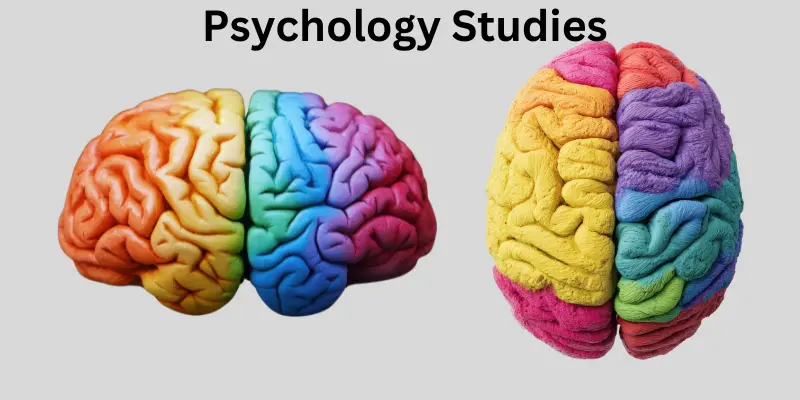
Psychology Studies refers to the academic and scientific examination of the human mind, emotions, and behavior. It explores how people think, how they make decisions, how they react to situations, and how mental processes influence actions. As a discipline, psychology blends elements from biology, neuroscience, sociology, medicine, anthropology, linguistics, cognitive science, and mental health research, making it one of the broadest behavioral sciences in modern education.

Today, Psychology Studies are rapidly expanding due to increasing interest in mental health, workplace well-being, counseling services, therapy, and brain-behavior research. Students choose psychology for careers in counseling, clinical settings, research labs, healthcare, HR, marketing, education, and digital behavior analytics. Globally, psychology careers are projected to grow steadily, driven by the rising need for mental health awareness and professional intervention.
How Psychology Studies Works
Psychology Studies works by examining how the mind processes thoughts, emotions, and behaviors through scientific methods, observation, and research. It uses experiments, case studies, surveys, brain-imaging, behavioral analysis, and clinical assessment to understand why people act and think the way they do. By linking theory with real-world behavior, psychology helps predict and modify actions, improve mental health, and solve social, personal, and workplace problems.
Psychology Studies Comparison With Others
Psychology Studies differs from other disciplines because it focuses on human behavior, cognition, and emotional processes. Compared to psychiatry, psychology is less medical and more behavioral; compared to neuroscience, it emphasizes thoughts and behavior rather than only brain biology; compared to sociology, it studies individuals rather than large groups; and compared to counseling, it contains more theory, research, and scientific analysis. Psychology stands at the intersection of science, health, and social study.
Why Psychology Studies Matter Today
The world is more complex, stressful, and interconnected than ever. Factors such as digital overload, work pressure, family dynamics, and emotional fatigue are influencing mental well-being. Because of this, psychological professionals are becoming essential across schools, companies, hospitals, and social systems.
Psychology helps society:
- Improve emotional intelligence
- Enhance communication
- Support mental health care
- Understand developmental stages
- Improve decision-making
- Resolve conflict + social behavior issues
- Build healthy relationships
- Increase productivity and well-being
This interdisciplinary relevance makes Psychology Studies both practical and transformative.
Understanding the Scope of Psychology Studies
The scope of psychology today extends beyond therapy and clinical work. Fields such as industrial-organizational psychology, forensic psychology, health psychology, neuropsychology, sports psychology, educational psychology, digital behavior research, UX psychology, and AI cognition studies are expanding rapidly.
Modern psychology now responds to real-world challenges including:
- Addiction & trauma recovery
- Autism & neurodevelopmental disorders
- Anxiety & depression management
- Workplace stress & burnout
- Learning disabilities in children
- Relationship & marital counseling
- Behavioral profiling & decision science
- Digital attention span research
- Brain-computer interface design
- CX & marketing consumer psychology
This broad applicability is a major reason Psychology Studies attract students worldwide.
Major Branches & Fields of Psychology Studies
Below are the core branches taught in universities and psychology degree programs:
1. Clinical Psychology
Focuses on diagnosing and treating mental disorders, emotional disturbances, and behavioral issues. Clinical psychologists work in hospitals, rehab centers, and private practice.
2. Counseling Psychology
Deals with personal, social, and workplace problems including stress, grief, relationship issues, communication, and lifestyle adjustment.
3. Developmental Psychology
Studies psychological growth from infancy to old age, covering cognitive, emotional, and social development.
4. Cognitive Psychology
Explores memory, thought, learning, problem-solving, language, and information processing functions.
5. Biological / Neuropsychology
Links brain structures, nervous system activity, and human behavior. Often overlaps with neuroscience and biomedical science.
6. Educational Psychology
Examines learning processes, student behavior, classroom environment, and curriculum design.
7. Industrial-Organizational (I-O) Psychology
Applies psychology to workplace performance, HR, leadership, motivation, and job satisfaction.
8. Forensic Psychology
Connects psychology with criminal investigation, legal decision-making, and corrections.
9. Health Psychology
Focuses on psychological influences in illness, lifestyle, physical health, and recovery behaviors.
10. Social Psychology
Explores how society, culture, peer groups, and social norms influence behavior and attitudes.
11. Sports Psychology
Enhances athletic performance, focus, motivation, and team dynamics.
12. Comparative & Evolutionary Psychology
Studies adaptive behavior, instinct, evolution, and cross-species comparisons.
How Psychology Studies Developed
Modern psychology originated from philosophical debates about mind & behavior. Over time, major schools emerged:
- Structuralism (Wundt)
- Behaviorism (Skinner & Pavlov)
- Psychoanalysis (Freud)
- Humanism (Rogers & Maslow)
- Cognitivism (Chomsky, Piaget, Bandura)
- Neuroscience & biological psychology (modern era)
Today, psychology integrates empirical research, clinical trials, data science, and neuroimaging, reinforcing its scientific credibility and EEAT requirements.
Eligibility & Prerequisites for Psychology Studies
Admission requirements vary, but commonly include:
- High school diploma with science or social science
- Interest in mental health & human behavior
- Strong communication skills
- Empathy & patience
- Analytical & research ability
- Basic statistics & experimental design familiarity
Universities also offer associate, bachelor’s, master’s, and doctoral (PhD/PsyD) pathways.
What You Learn in Psychology Studies
Typical course modules include:
- General psychology
- Behavioral science
- Abnormal psychology
- Developmental psychology
- Biological psychology
- Social psychology
- Research methods
- Cognitive science
- Personality theories
- Neuroscience basics
- Statistics & data analysis
- Psychopathology
- Counseling techniques
Advanced specializations evolve in higher degrees.
Careers After Psychology Studies
Common career paths include:
Clinical Psychologist
Counseling Therapist
Forensic Psychologist
School Psychologist
Rehabilitation Specialist
Neuropsychology Assistant
HR Specialist
Behavioral Research Analyst
Marketing & Consumer Behavior Analyst
Student Advisor
Social Worker
Corporate Wellness Coach
Academic Researcher
Child Development Specialist
Because psychology interacts strongly with society, workplaces increasingly value this expertise.
Job Market & Salary Expectations
Psychology career salaries depend on:
- Country
- Education level
- Licenses
- Type of role
- Experience
- Sector (private/public)
U.S. and European clinical psychologists generally earn higher, while research and academic roles vary by institution. LinkedIn, BLS, and global recruitment statistics predict steady growth in mental health & behavioral science fields.
Benefits of Psychology Studies
- Improves emotional intelligence
- Enhances communication & relationships
- Builds critical thinking skills
- Supports conflict management
- Encourages personal growth
- Creates mental health awareness
- Offers diverse career paths
- Blends science & humanity
Challenges in Psychology Studies
- Emotionally demanding work
- Ethical & moral dilemmas
- Long study periods for licensing
- Requires strong empathy & patience
- Exposure to trauma & distress
- High responsibility work
Despite these challenges, psychology remains one of the most rewarding behavioral sciences.
Future Trends in Psychology Studies
The future of psychology is multidisciplinary. Key emerging trends include:
AI-assisted diagnostics
Digital therapy & tele-mental health
Neuro-cognitive interfaces
Brain imaging innovations
Workplace well-being programs
Gen-Z mental health support
Behavioral UX & product psychology
Personalized therapy through data analytics
These trends ensure psychology remains relevant for decades.
FAQs
1. What are Psychology Studies?
Psychology Studies explore human behavior, emotions, cognition, and mental health. The field examines how people think, learn, and interact, and applies scientific methods to understand brain-mind processes. It is used in healthcare, education, business, and research.
2. Why should someone study psychology?
People study psychology to develop emotional intelligence, communication skills, and behavioral insights. It supports careers in mental health, HR, counseling, research, and social services. It also benefits personal growth and understanding relationships.
3. Is psychology a science or humanities subject?
Psychology is considered a behavioral science, though it blends scientific research with elements of humanities and social studies. It uses experiments, data, statistics, and neuroscience to explore mental processes and behavior.
4. What jobs can you get after studying psychology?
Graduates work as counselors, therapists, social workers, HR specialists, forensic analysts, academic researchers, and clinical psychologists (with advanced training). Psychology careers exist in schools, hospitals, corporations, and government sectors.
5. How long does it take to become a psychologist?
The timeline depends on the country and specialty. A bachelor’s degree takes 3–4 years, a master’s takes 2 years, and doctoral training/clinical licensing can take an additional 3–6 years. Total study time ranges from 5 to 10+ years for advanced roles.
6. Is Psychology Studies good for the future?
Yes — global demand for mental health professionals, therapists, workplace psychologists, and behavioral analysts is rising. Increasing stress, technology use, and lifestyle changes make psychology one of the fastest-growing human science fields.
Summary of Psychology Studies
Psychology Studies offers a deeper understanding of how people think, feel, and behave. It blends science with practical applications, leading to careers in mental health, education, business, research, and community support. With increasing global awareness of mental health and emotional well-being, psychology continues to grow as a vital discipline for both society and individuals, making it a meaningful field to study and pursue professionally.
Conclusion
Psychology Studies provides deep insights into human behavior, emotions, and cognition. It offers a diverse career scope, strong real-world relevance, and the ability to improve society through mental health support and behavioral research. As demand for emotional well-being grows worldwide, psychology continues to evolve as a future-proof educational and professional field.
Please Write Your Comments